Introduction
Have you ever thought about writing a book, but then felt stuck before even starting? You’re not alone. Many beginners reach a point where they ask themselves a very simple but important question: Should I write this book myself, or should I hire someone to write it for me? This is one of the biggest decisions you’ll make as a new author, and honestly, it can feel overwhelming at first.
On one side, you have ghostwriting, where a professional writer helps turn your ideas into a complete book. On the other side, you have writing your own book, where you take full control of the entire process from start to finish. At first, it might seem like an easy choice, but once you think about time, money, effort, and quality, things start to get a bit more complicated. This decision matters because it affects how long your book will take, how much it will cost, how good it turns out, and how connected you feel to it.
I’ve seen people delay their dream of becoming an author just because they couldn’t decide between these two options. So in this guide, we’ll walk through everything in a simple and friendly way. By the end, you’ll understand the pros and cons, the real cost of ghostwriting, and which path makes the most sense for you.
What Is Ghostwriting?
Let’s keep this simple. Ghostwriting means hiring someone to write your book for you while you remain the official author. Your name goes on the cover, and you take full credit for the work. The ghostwriter stays behind the scenes.
The process usually starts with your idea. You share your vision, your story, or your knowledge. Then the ghostwriter creates an outline and starts building the structure of your book. You may have interviews or regular discussions where you explain your thoughts in detail. Based on that, the ghostwriter writes drafts, and you review them, suggest changes, and guide the direction. It’s a collaborative process, not just a one-time handoff.
Today, ghostwriting is used by many different people. Entrepreneurs, influencers, coaches, and busy professionals often choose this route because they simply don’t have the time to write. Even first-time authors are now using ghostwriters to speed up the process. I once spoke with a business owner who had incredible ideas but no time to write. He hired a ghostwriter, and within two months, his book was ready. That book helped him build authority and attract clients. That’s the real power of ghostwriting it saves time and delivers professional results.
What Does Writing Your Own Book Mean?
Now let’s talk about the other path. Writing your own book means you handle everything yourself. You start with an idea and turn it into a finished product using your own effort and creativity. This includes brainstorming, researching, writing, editing, and preparing the book for publishing.
This path is usually chosen by people who enjoy writing or want full control over their work. It’s also a common choice for beginners who are on a tight budget. Writing your own book can be a deeply personal experience. It allows you to express your thoughts in your own voice without relying on someone else.
I remember when I first tried writing a book. It took me months just to get through the first draft. It wasn’t perfect, and I made a lot of mistakes, but the sense of achievement was real. There’s something special about finishing a book and knowing every word came from you. For many beginners, that feeling is worth the extra effort.
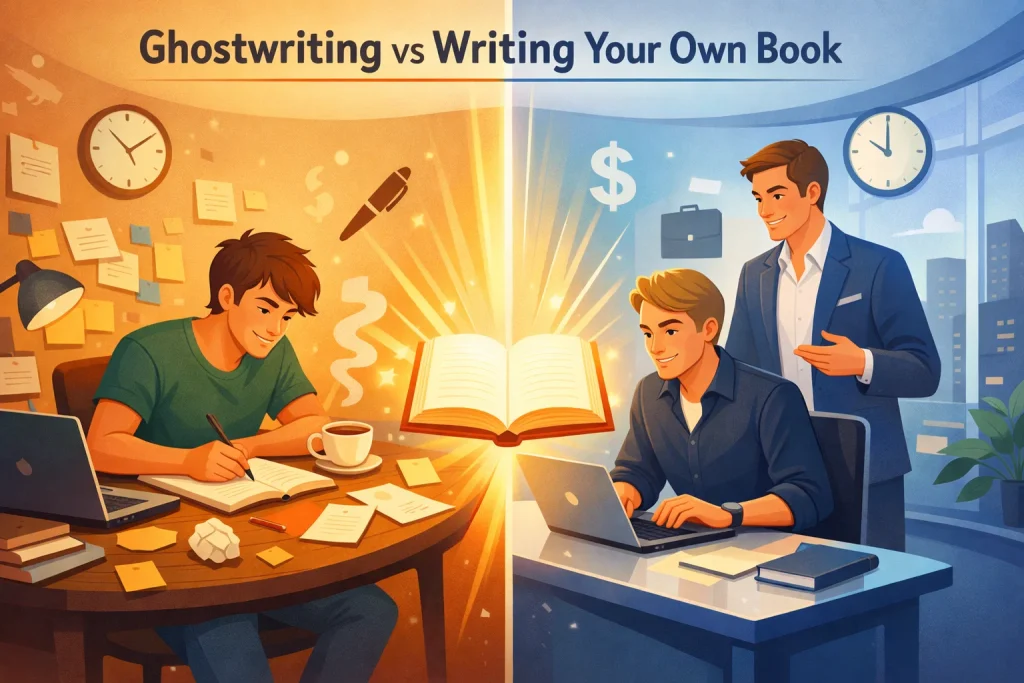
Ghostwriting vs Writing Your Own Book
When you compare both options, the differences become clear. Ghostwriting is faster but more expensive, while writing your own book is cheaper but takes more time and effort. With ghostwriting, you don’t need strong writing skills, but you do need a budget. With writing yourself, you save money but must invest your time and energy.
Creative control is another key difference. When you write your own book, you have full control over every detail. With ghostwriting, you share that control with someone else. Quality is also a factor. Ghostwritten books are usually more polished because they are written by professionals, while self-written books depend on your skill level and experience.
So in simple terms, the choice often comes down to this: do you want to spend money to save time, or spend time to save money?
Cost Breakdown
Let’s talk about money, because this is where most beginners hesitate. The cost of ghostwriting can vary widely depending on the experience of the writer and the complexity of the project. Beginner ghostwriters may charge between $1,000 and $5,000. More experienced professionals can charge anywhere from $5,000 to $25,000 or more. High-end ghostwriters may even charge $50,000 or higher.
The cost of ghostwriting might seem high at first, but it reflects the time, effort, and expertise involved in creating a professional book. On the other hand, writing your own book is more affordable, but it still comes with some costs. You may need to pay for editing, formatting, and cover design. Editing alone can cost between $200 and $2,000.
Even if you choose to write your own book, investing in Professional Book Editing Services is highly recommended. Editing can transform a rough draft into a polished and readable book. Skipping this step is one of the biggest mistakes beginners make.
In the end, ghostwriting is a financial investment, while writing yourself is a time investment. Both require commitment in different ways.
Time Commitment
Time is another important factor to consider. Ghostwriting is much faster. In most cases, a ghostwritten book can be completed within one to three months. This makes it a great option for people who want to publish quickly.
Writing your own book, however, can take anywhere from three months to over a year. It depends on your schedule, discipline, and writing speed. Many people start writing with enthusiasm but struggle to stay consistent.
So ask yourself honestly: do you have the time and patience to finish what you start? Because finishing a book is often harder than starting one.
Pros and Cons of Ghostwriting
Ghostwriting comes with several advantages. It saves time, reduces stress, and delivers high-quality results. You can focus on your ideas while a professional handles the writing. This is especially useful if you’re building a brand or business.
However, it also has some downsides. It can be expensive, and you may feel less personally connected to the writing process. You also need to trust the ghostwriter to represent your voice accurately.
Pros and Cons of Writing Your Own Book
Writing your own book has its own set of benefits. You have full creative control, lower costs, and a strong sense of personal achievement. It also helps you develop your writing skills.
On the downside, it takes time, effort, and discipline. It can feel overwhelming, especially for beginners. The quality of your book may also vary depending on your experience.
Which Option Is Better for Beginners?
The truth is, there’s no single right answer. It depends on your situation. If you don’t have time or confidence in your writing, ghostwriting may be the better choice. Many people use it as part of their Book Publishing Services strategy to publish quickly and professionally.
If you enjoy writing and want to stay within a budget, writing your own book might be the better option. Some beginners, inspired by the journey of a david mckay author, prefer to learn and grow through the process of writing.
Hybrid Option
There’s also a third option that many beginners overlook. You can combine both approaches. For example, you can write your first draft and then hire professionals to refine it. This could include editors or partial ghostwriters.
Using Professional Book Editing Services in this stage can greatly improve the quality of your book while keeping your original voice intact. This approach saves money, maintains authenticity, and delivers better results.
Common Mistakes Beginners Make
Many beginners make avoidable mistakes. Some hire cheap ghostwriters and end up with poor-quality work. Others skip planning and jump straight into writing without a clear outline. Many underestimate how long writing takes and lose motivation halfway through.
Another common mistake is skipping editing. Even a well-written book needs polishing. And finally, some expect instant success after publishing, which rarely happens without proper marketing.
Real-Life Use Cases
In real life, both approaches work. A business owner might hire a ghostwriter to quickly build authority. A beginner might write their own book for personal satisfaction. Others choose a hybrid approach, writing a draft and then improving it through Book Publishing Services.
This flexible approach is becoming more common, even among those following paths similar to a david mckay author journey.
Tips to Succeed
No matter which option you choose, success depends on a few key things. Start with a clear goal. Know why you’re writing and who you’re writing for. Create an outline to guide your work. Invest in editing to improve quality. And most importantly, stay consistent.
Working with platforms like David Mckay Publications can also make the process smoother, especially if you’re new to publishing.
FAQs
Ghostwriting is completely legal, and ghostwriters are usually paid upfront rather than receiving royalties. Beginners can absolutely write good books with enough effort and proper editing. If you’re looking for a ghostwriter, you can explore agencies or services like David Mckay Publications. Whether ghostwriting is worth it depends on your goals, but it’s a great option if you value time and quality.
Conclusion
So, what’s the final answer? The truth is, there isn’t one perfect choice for everyone. It really comes down to your budget, your time, and your goals. If you have the money but not much time, ghostwriting can be a smart investment that helps you move faster and get professional results. On the other hand, if you have the time and want full creative control, writing your own book can be a deeply rewarding experience. But no matter which path you choose, the most important thing is that you actually finish your book. An unfinished idea will always remain just that an idea. But a completed book has the power to open doors, build your personal brand, and create new opportunities you never expected. So now, the real question is simple: are you ready to start writing, or are you ready to get the help you need to finally make your book a reality?