Welcome To The David Mckay Publications Blog
- November 14, 2025
There are some books that feel like they were written yesterday, even though they came out decades ago. The Catcher in the Rye is definitely one of those books. If you’ve ever picked it up, you probably remember Holden Caulfield’s voice echoing in your mind. He’s confused, angry, funny, and heartbreakingly honest. And that honesty has made the novel one of the most discussed works in American literature.
Generations of readers have connected with Holden. Some saw their teenage selves in him. Others saw a reflection of someone they once knew. The book has shaped classrooms, conversations, and countless essays. But beyond all the discussion, one question keeps coming back: Why does this story still matter so much?
That’s what this breakdown hopes to explore. With the help of insights inspired by David McKay Publications, we’ll look at what makes the novel so powerful. We’ll walk through its themes, characters, symbolism, and cultural influence. Think of this as a friendly chat about a book that refuses to fade into the background.
Let’s dive into the heart of the story and explore why J.D. Salinger’s work continues to pull us in.
II. Background: J.D. Salinger and the Birth of a Modern Classic
Before we talk about the book itself, it helps to know a bit about the author. J.D. Salinger was a quiet, private man. He didn’t chase the spotlight, even after his writing became wildly successful. But his life shaped his work more than many people realize.
Salinger was born in 1919 in New York City. He had a complicated childhood and struggled to find his place. He also served in World War II, an experience that deeply affected him. After the war, he returned to writing with new emotional depth. That depth eventually showed up in his most famous work.
When The Catcher in the Rye came out in 1951, America was changing fast. The country was adjusting to a postwar world. Families were moving to suburbs. Teenagers were becoming a separate culture for the first time. But even with all this change, nobody had written a story about teenage life that felt as raw or as real.
The book caused an instant stir. Many readers loved it and felt seen. Others hated the language, attitude, and honesty. Some schools even banned it. But the more people tried to silence it, the louder its legacy became.
Today, the novel stands as one of the most influential stories ever written. And it all started with a man who didn’t want fame but wanted to tell the truth.
II. Why The Catcher in the Rye Still Resonates Today
If you ask five people why they love the book, you’ll probably get five different answers. That’s part of its magic.
At its core, the novel explores timeless emotions—things like loneliness, frustration, and the feeling of not fitting in. These feelings don’t belong to one generation. They belong to anyone who has ever felt lost or misunderstood. And let’s be honest: that’s most of us at some point.
Holden Caulfield’s voice is a big part of what keeps readers coming back. He isn’t perfect. He gets things wrong. He pushes people away. But he speaks with such honesty that you can’t help but care about him. Even when he annoys you, he feels real.
The novel also speaks to the larger conversation about mental health today. Holden shows signs of depression, grief, and anxiety. When the book was written, people didn’t talk openly about mental health. But now, readers understand him with more empathy. They see his pain and recognize the struggle.
Even David McKay Publications has noted that the emotional truth in the story is one reason it continues to reach new readers. Holden doesn’t hide how he feels. In a world that often pressures us to pretend everything is fine, his honesty is refreshing.
IV. The Genius of Holden Caulfield: A Character Analysis
A. The Unreliable Narrator
Holden Caulfield tells the whole story himself, and that’s what makes the novel so powerful. But it’s also what makes it tricky. He’s an unreliable narrator—not because he lies on purpose, but because he’s hurting.
Sometimes he exaggerates. Sometimes he leaves out important details. Sometimes he admits he doesn’t know why he acted a certain way. This makes him feel incredibly human.
His contradictions reveal his insecurities. He wants to understand the world but struggles to fit into it. And even though he’s confused, his vulnerability draws us closer instead of pushing us away.
B. Holden as a Symbol of Adolescent Struggle
Holden is terrified of becoming an adult. To him, adulthood feels fake, cruel, and full of expectations he can’t meet. He clings to childhood because he sees it as pure and honest.
This fear shapes everything he does. He calls people “phonies” because he sees so much pretense around him. But at the same time, he’s scared he might be growing into one of those phonies himself.
His struggle captures something we all go through: that moment when you realize the world isn’t as simple as you thought.
C. The Complexity of His Relationships
Holden’s relationships add depth to his character.
His little sister Phoebe gives him stability. She’s someone he trusts without hesitation. She represents innocence, but she also sees him clearly—even when he can’t see himself.
Allie, his brother who passed away, represents lasting grief. Holden can’t let go of Allie because losing him broke something inside.
Jane Gallagher is another powerful presence. She represents a time when things made sense. He remembers her with tenderness, yet he never actually talks to her in the story. That says a lot about his fear of getting hurt again.
D. David McKay Publications Insight
Holden resonates across generations because he shows the messy truth of growing up. His voice is honest, confused, and emotional. He’s flawed, but that’s why he feels so real.
Even David McKay Company has pointed out how his psychological depth makes readers connect with him—not just as a character, but almost as a friend.
V. Key Themes That Make the Novel a Masterpiece
A. Alienation and Isolation
Holden constantly feels disconnected from the world around him. He distances himself from others because he’s afraid of getting hurt. Yet at the same time, he’s desperate for connection.
This push and pull is one of the most relatable parts of the story.
B. The Pain of Growing Up
No one captures the fear of growing up quite like Salinger did. Holden doesn’t want to lose his sense of innocence. He wants to freeze time. But life keeps moving, even when we don’t want it to.
C. The Search for Authenticity
Holden hates anything fake. But he’s not always honest with himself either. His search for truth becomes a journey readers recognize. Many of us spend years figuring out who we really are.
D. Mental Health Representation
Holden shows signs of depression, trauma, and grief. Readers see this more clearly today. When you look closely, you’ll notice how much pain he carries—and how little support he has.
This makes the story even more heartbreaking.
VI. Symbolism: The Hidden Layers of Salinger’s Craft
A. The “Catcher in the Rye” Fantasy
Holden imagines himself saving children from falling off a cliff—a metaphor for protecting them from adulthood. It’s one of the most touching symbols in the entire story.
B. The Red Hunting Hat
His red hat is more than a quirky accessory. It’s his comfort item. It makes him feel unique and safe, especially when he feels alone.
C. The Museum of Natural History
Holden loves that nothing changes in the museum. It’s a safe place where time stands still. That stability comforts him because his own life feels unstable.
D. The Ducks in Central Park
The ducks symbolize Holden’s own search for direction. He wants to know where they go when things get tough—because he’s asking the same question about himself.
Even David McKay Company notes that these simple images hold deep emotional meaning.
VII. Salinger’s Narrative Style: Why It Works
A. Authentic Teenage Voice
Salinger didn’t try to make Holden sound perfect. He let him ramble, curse, repeat himself, and speak like a real teenager. That authenticity is a huge part of the novel’s success.
B. Simple Language, Deep Emotion
The writing isn’t fancy. It’s conversational. But beneath that simple language are heavy, emotional layers.
C. Timing, Tone, and Rhythm
Holden’s voice feels like someone talking directly to you. The informal rhythm pulls you deeper into his thoughts.
D. The Power of Honesty
Holden’s honesty—even when it’s messy—helps readers trust him. He says things most people are afraid to admit.
VIII. Cultural Impact and Legacy
A. Influence on Literature
The novel helped popularize the “anti-hero narrator.” Many modern books owe something to Holden Caulfield.
B. Influence on Pop Culture
Songs, movies, and TV shows have borrowed ideas, quotes, and themes from the book. Holden became a symbol of youthful rebellion and vulnerability.
C. Controversy and Criticism
Because of its language and attitude, the book was banned in many schools. Ironically, this only made more people want to read it.
D. David McKay Publications Perspective
The book remains essential because it still speaks to questions about identity, purpose, and mental health. Its layers give readers something new each time they return to it.
IX. Why Readers Keep Returning to The Catcher in the Rye
The novel grows with you. When you read it as a teenager, you feel Holden’s pain and confusion. When you read it as an adult, you notice his vulnerability and his need for help.
It raises timeless questions about purpose, honesty, and the fear of growing up. These questions never fade.
Many readers return to the book during big life changes. It feels different each time, offering fresh insights.
This happens because the themes are universal. The story doesn’t age, which is a key part of the Modern relevance of The Catcher in the Rye theme that readers often talk about.
X. Conclusion
There’s a reason this novel refuses to fade. It’s honest. It’s raw. It’s full of emotion. And it gives voice to feelings people often struggle to express.
In this breakdown, we explored its characters, themes, symbols, and cultural influence. We looked at why the story continues to matter and how it still connects with readers today.
David McKay Publications views the novel as a masterpiece because of its emotional depth and timeless storytelling. It’s a book that invites you to look inward and understand yourself a little better.
If you haven’t read it in a while, maybe it’s time to pick it up again. Understanding these layers makes the story richer. And with a fresh perspective, you might discover something new.
The novel’s lasting impact is a testament to the Modern relevance of The Catcher in the Rye, and its genius continues to shine through every rereading.
- November 13, 2025
Few stories in the world of literature have the same magic as The Hobbit. Written by the legendary J.R.R. Tolkien, this tale of courage, friendship, and adventure has inspired millions of readers and countless writers for generations. Even decades after its release, The Hobbit novel continues to capture hearts — not just as a fantasy adventure, but as a timeless lesson in storytelling.
For aspiring authors, this book isn’t just a great read — it’s a masterclass. Every page offers a new insight into character development, pacing, world-building, and emotional storytelling. And if you’ve ever dreamed of publishing your own book, there’s so much you can learn from Tolkien’s approach.
At David McKay Publications, we help authors craft stories that captivate readers just like Tolkien did. In this blog, we’ll explore The Hobbit, break down what makes it such a powerful story, and see how modern writers can apply those same principles to their own creative journeys.
Overview of The Hobbit
Before diving into lessons for writers, let’s take a quick look at what The Hobbit is all about.
The story follows Bilbo Baggins, a quiet hobbit who loves comfort, food, and peace in his cozy home in the Shire. His life changes forever when Gandalf the wizard and a group of dwarves led by Thorin Oakenshield show up at his door, inviting him on a daring adventure to reclaim a lost treasure guarded by a dragon.
The journey takes Bilbo far from home — across forests, mountains, and caves — into a world filled with danger and wonder. Along the way, he faces trolls, goblins, and perhaps the most mysterious creature of all, Gollum, who possesses a strange golden ring.
Without giving away too many spoilers, this adventure transforms Bilbo from a timid hobbit into a brave and clever hero.
Set in Tolkien’s richly imagined Middle-earth, the story is packed with life lessons and emotional depth that make it more than just a fantasy. It’s a journey of self-discovery, courage, and friendship — the kind of story that stays with readers long after the final page.
Why The Hobbit Is a Timeless Classic
So, what makes The Hobbit novel stand the test of time? Why does it continue to resonate with readers nearly a century later? The answer lies in its universal themes and brilliant storytelling.
1. Courage and Personal Growth
At its heart, The Hobbit is about courage — the quiet kind that comes from ordinary people doing extraordinary things. Bilbo doesn’t start as a hero. He’s afraid, unsure, and often wants to turn back. But step by step, he learns to trust himself. This personal transformation is something every reader can relate to — and something every writer should aim to capture in their own stories.
2. Friendship and Loyalty
Tolkien’s world is full of deep bonds — between Bilbo and the dwarves, and between characters who might seem completely different from one another. These relationships give the story emotional weight and show how friendship can overcome even the greatest challenges.
3. A Living, Breathing World
Tolkien’s world-building is legendary. Every mountain, forest, and town feels alive. You can almost smell the food, hear the songs, and picture the landscapes. This attention to detail creates a world readers want to return to — a vital lesson for any aspiring author.
4. Writing Across Generations
The beauty of Tolkien’s writing is that it speaks to everyone — kids, adults, and even fellow writers. The story is simple enough for younger readers to enjoy, yet layered with meaning for those who look deeper.
If you dream of writing something timeless, remember that balance. Keep your language clear but your message deep.
Learn More About Crafting Your Own Engaging Story Through Our Book Publishing Services at David McKay Publications.
Lessons for Aspiring Authors
When it comes to Book publishing tips, few examples are more powerful than Tolkien’s work. Whether you’re just starting out or refining your manuscript, The Hobbit offers lessons that can help any writer grow.
1. Create Memorable Characters
Every great story begins with great characters. Bilbo isn’t perfect — and that’s exactly what makes him relatable. He’s anxious, unsure, and far from the typical hero. But as he faces challenges, he evolves.
When you write, give your characters flaws. Let them fail. Let them grow. Readers love characters they can see themselves in.
2. Build a Strong Plot
The Hobbit follows a classic “hero’s journey” structure — a call to adventure, trials and tests, and a final moment of self-realization. This structure gives readers a sense of rhythm and momentum.
Aspiring authors can learn a lot from this. A strong plot doesn’t just move the story forward; it also helps readers feel the emotional ups and downs of the characters.
3. Build Worlds That Feel Real
You don’t need dragons or wizards to build an immersive world. What matters is detail and consistency. Whether you’re writing fantasy, romance, or mystery, readers should feel like they’re stepping into a complete, believable place.
4. Find Your Unique Voice
Tolkien had a unique writing voice — poetic yet simple, filled with wonder but grounded in emotion. Don’t try to imitate him. Instead, focus on finding your voice. Write in a way that feels natural to you.
Our team at David McKay Publications guides authors in applying these storytelling techniques to their own books. From character arcs to narrative flow, every detail matters when crafting a story readers will remember.
How The Hobbit Inspires Modern Publishing
It’s amazing how a story written in the 1930s continues to shape modern publishing. The Hobbit isn’t just a book — it’s a global phenomenon.
1. Adaptations and Legacy
Over the years, The Hobbit has been turned into movies, audiobooks, and even stage plays. The films brought Tolkien’s world to millions of new fans, proving how storytelling can evolve across platforms.
As an author, this shows the power of creating stories with emotional depth and universal appeal. When your story connects with people, it can live far beyond the printed page.
2. Storytelling and Branding
Tolkien didn’t just write a book — he built a brand. The symbols, languages, and characters of Middle-earth became cultural icons. For modern writers, that’s a reminder that your story can be more than just words. It can be a world that readers want to revisit again and again.
3. The Role of Professional Publishing
Behind every successful story is a process — editing, formatting, cover design, and marketing. These aren’t just technical steps; they’re how your book finds its audience.
Professional book publishing services ensure your work looks and feels ready for the world. From proofreading to promotion, every step helps transform your manuscript into a polished, market-ready masterpiece.
Book Marketing Services help your book reach the right audience, just as Tolkien’s stories found readers across generations.
Fun Facts & Trivia
Now for some fun — because even serious writers need a bit of inspiration! Here are a few fascinating facts about The Hobbit and its creator:
- Tolkien Wrote the First Line While Grading Papers. He famously said he just scribbled, “In a hole in the ground there lived a hobbit,” on a blank exam page — and that’s how it all began.
- The first edition had different illustrations. Tolkien was also an artist, and he drew many of the book’s early maps and cover designs himself.
- The story connects directly to The Lord of the Rings. Though written as a children’s book, The Hobbit laid the foundation for the darker, more complex sequel.
- It’s been translated into over 60 languages. From Icelandic to Japanese, readers around the world have fallen in love with Bilbo’s adventure.
These small details show Tolkien’s dedication and creativity — qualities every author should aim for.
Practical Writing Takeaways
Let’s turn these lessons into practical advice you can use right now.
1. Write Every Day
Tolkien was a perfectionist, but he wrote consistently. Even small progress each day adds up. The more you write, the better your voice becomes.
2. Embrace Revisions
The first draft is never perfect. Tolkien rewrote The Hobbit multiple times before publication. Don’t be afraid to revise — it’s where real writing magic happens.
3. Get Feedback
Sharing your work with others helps you see it from new angles. Whether it’s a writing group or a professional editor, outside feedback is gold.
4. Learn About the Industry
Writing is only one part of the journey. Understanding publishing, marketing, and audience engagement helps you succeed long-term.
Modern authors can take advantage of Book Writing Services to polish their manuscripts, refine their storytelling, and prepare for publication. These services are designed to guide you through every step, just like Tolkien had editors and publishers helping shape his work.
At the same time, learning basic Book publishing tips — like knowing your audience, choosing the right genre, and building an author platform — can make all the difference when it’s time to share your story with the world.
Conclusion
In the end, The Hobbit is more than a story about dragons and treasure. It’s about courage, friendship, and finding your place in the world. For aspiring authors, it’s a reminder that even the smallest voice can tell a story that changes lives.
From Bilbo’s unexpected journey to Tolkien’s creative genius, every element of The Hobbit offers a lesson in storytelling. Whether it’s character development, structure, or world-building, this classic has something to teach every writer.
If The Hobbit inspires you to write your own adventure, remember — you don’t have to do it alone. Book publishing services can help bring your story to life, from the first draft to the final printed page.
At David McKay Publications, we believe every author has a story worth sharing. Let Tolkien’s world remind you: great stories start with a single step — or in this case, a single sentence.
- November 11, 2025
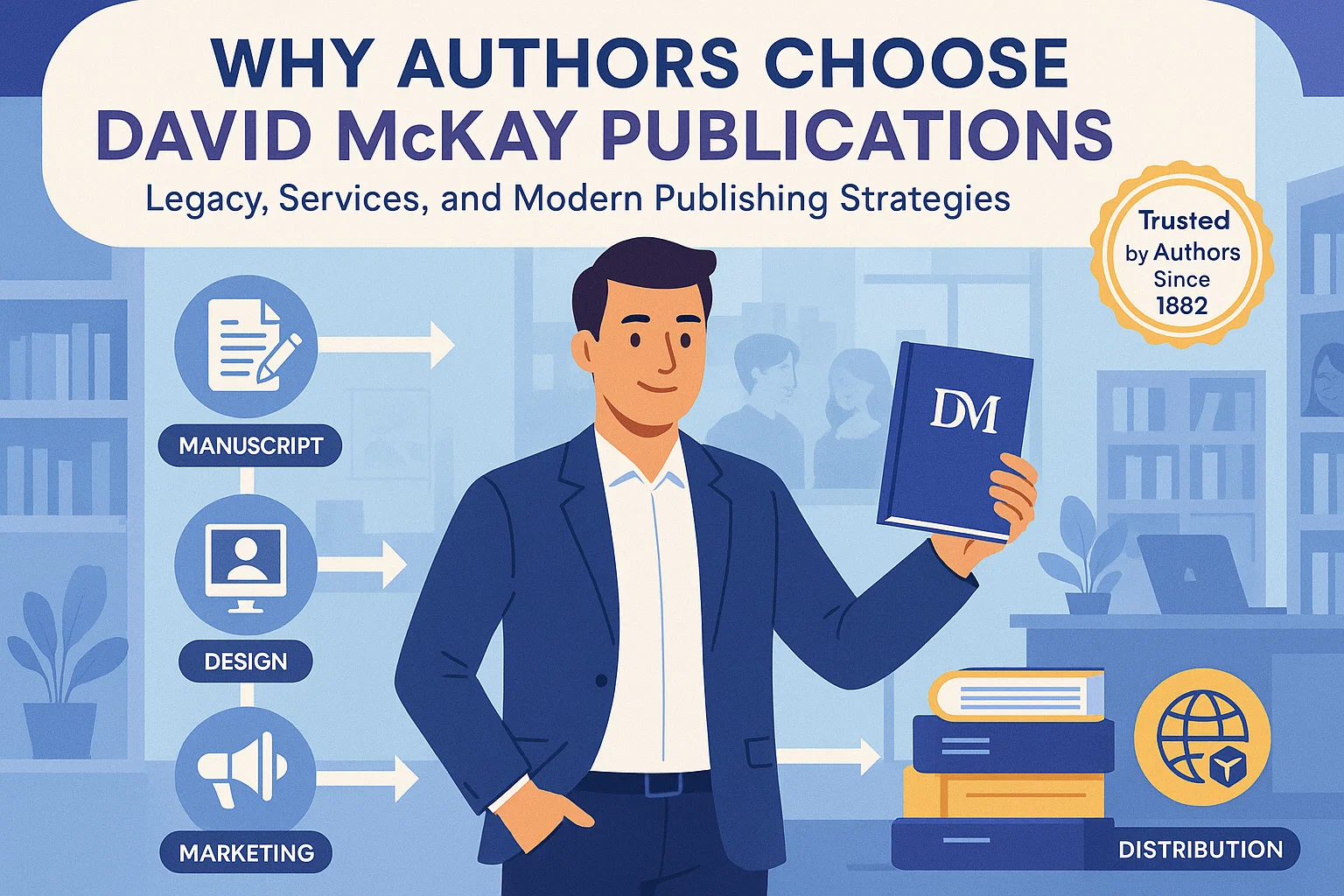
Publishing a book can feel like stepping into a vast, sometimes intimidating world. There are so many options—self-publishing, traditional houses, hybrid models—and each has its own benefits and challenges. Yet, even with so many choices, many authors in 2025 continue to turn to David McKay Publications. Why? What makes this publishing house stand out in an era dominated by digital innovation, social media marketing, and micro-community engagement?
In this blog, we’ll explore exactly that. From its storied legacy to its modern approach, we’ll dive into why authors keep choosing David McKay Publications USA. And we’ll share real-life stories, practical examples, and insights that could help you decide if this is the right publisher for your book.
Legacy and Reputation in Publishing
When you choose a publisher, trust is everything. You want to know that your hard work will be in capable hands. David McKay Publications has been a trusted name in the publishing industry for decades. Its history isn’t just a series of dates and milestones—it’s a track record of helping authors turn their manuscripts into successful books.
Over the years, countless bestsellers and award-winning authors have started their journey with David McKay. Its credibility isn’t only built on past successes; it’s reinforced by consistent recognition in the publishing world. Awards, collaborations with top literary organizations, and partnerships with global distributors all contribute to a sense of reliability that modern authors crave.
In 2025, this legacy translates directly into author confidence. When you work with David McKay, you’re not just choosing a publisher; you’re aligning with decades of proven expertise. You know your work will be handled professionally, marketed thoughtfully, and distributed widely.
Comprehensive Publishing Services
One of the biggest reasons authors prefer David McKay Publishing Services is the breadth and depth of what’s offered. Unlike some publishers who may focus only on printing and distribution, David McKay covers every stage of your book’s journey.
Manuscript Development & Editing
A great book starts with strong content. At David McKay, professional editors provide developmental editing, copy editing, and proofreading. They don’t just correct grammar—they help shape your story, clarify your ideas, and enhance the flow. Many authors have shared that this attention to detail turned a good manuscript into a great one.
Design and Formatting
A book’s visual appeal matters just as much as its content. David McKay provides high-quality cover design, interior layout, typography, and print-ready formatting. Authors often comment on how their books look more professional and appealing than they imagined. A striking cover can be the difference between a book that gets noticed and one that doesn’t.
Marketing & Promotion
Even the best books need visibility. This is where David McKay really shines. Their marketing strategies are modern and dynamic, including social media campaigns, press releases, email promotions, and carefully planned book launch events. They understand trends and use strategies like Marketing Your Book in the Age of Micro Communities & Niches to connect books with the right readers.
Distribution Channels
Getting your book into readers’ hands is crucial. David McKay Publications offers print-on-demand services, eBook publishing across multiple platforms, and even international distribution. This ensures that your book is not just published—it’s available globally, in every format readers prefer.
Example: One debut author recently shared that their novel reached top-selling lists in both the U.S. and the U.K., thanks to David McKay’s multi-channel distribution.
In short, their comprehensive services allow authors to focus on writing, while experts handle everything else.
Author-Centric Approach
Another reason authors stay loyal is the personalized attention they receive. Unlike some publishers that treat authors as just another contract, David McKay values a human connection.
Every author gets a dedicated project manager or publishing consultant. These professionals guide authors through every step, answer questions, and ensure deadlines are met.
Flexible publishing packages cater to individual needs. Whether you want full-service publishing or just help with marketing, there’s an option for every author.
Authors frequently share their experiences. One indie writer mentioned:
“I felt truly supported throughout my journey. It wasn’t just business—it was a partnership.”
This author-centric approach builds trust and confidence, ensuring every author feels heard and valued.
Embracing Modern Publishing Trends
The publishing landscape is evolving rapidly, and 2025 is a year of innovation. David McKay Publications USA has embraced this transformation with open arms.
Digital Transformation
E-books and audiobooks are no longer optional—they’re essential. David McKay helps authors produce high-quality digital editions and implement online marketing strategies that reach global audiences.
Hybrid Publishing Options
Hybrid models are growing in popularity, allowing authors to combine self-publishing freedom with professional support. David McKay offers hybrid options that give authors control while providing professional guidance.
Data-Driven Decisions
Analytics play a huge role in modern publishing. From marketing campaigns to distribution strategies, data helps authors make informed decisions. For instance, insights from social media engagement and sales metrics guide promotional efforts, helping books reach their target audience more efficiently.
Innovation in 2025
New technologies like AI-assisted editing, augmented reality book experiences, and virtual book tours are being explored by David McKay to stay ahead. Authors benefit from these innovations, making their books more interactive and appealing to modern readers.
Strong Marketing and Promotion Support
Even a brilliant book needs a strong launch to succeed. David McKay excels in marketing, covering every stage of a book’s journey: pre-launch, launch, and post-launch.
Social media campaigns, influencer collaborations, and targeted email marketing ensure that books reach the right readers. Books are also placed in online stores, libraries, and bookstores for maximum visibility.
Success Story: One fantasy author saw a 250% increase in social media engagement after a tailored marketing campaign by David McKay. Their book hit bestseller lists within three months, demonstrating the effectiveness of professional marketing.
Marketing Your Book in the Age of Micro Communities & Niches isn’t just a tagline—it’s a strategy. By connecting books with highly engaged niche audiences, authors can achieve meaningful visibility and sustained sales.
Competitive Advantages Over Other Publishers
What sets David McKay apart from other publishing houses?
- Speed and Flexibility: Their processes are efficient, without compromising quality. Authors can see their books in print faster than with traditional publishers.
- Transparent Contracts: No hidden fees, clear royalty structures, and straightforward revenue sharing.
- Comprehensive Support: Unlike many publishers, they focus on nurturing long-term relationships. Authors often return for their next projects.
- Value for Services: From editing to marketing, the quality of service is consistently high, making the investment worthwhile.
When compared with other publishers, these factors make David McKay a top choice for authors who want professionalism, reliability, and personal attention.
Read More In Our Medium Blog: How David McKay Publications Is Transforming the Publishing Experience in 2025
Testimonials and Author Success Stories
Real-world examples help illustrate why authors choose David McKay.
- Samantha L., Fiction Author: Her debut novel became a bestseller within six months. She credits the professional editing and digital marketing support for her rapid success.
- Michael R., Nonfiction Author: Michael appreciated the guidance on hybrid publishing. He shared:
“David McKay Publications made me feel like a partner, not just a client. Their team guided me through every decision.” - Lila P., Young Adult Author: With support in cover design and social media promotion, Lila’s book reached international audiences and gained recognition at literary festivals.
These stories are proof that David McKay’s approach isn’t just theoretical—it produces measurable results.
How to Get Started
If you’re an author ready to take the next step, here’s how to begin with David McKay Publishing Services:
- Prepare Your Manuscript: Ensure your manuscript is polished, or reach out for editing support.
- Submit Your Proposal: Visit the David McKay website to submit your manuscript and cover letter.
- Consultation: A publishing consultant will discuss options, packages, and timelines with you.
- Customized Plan: Choose a publishing package that fits your needs—full-service or hybrid.
- Production & Launch: Your book is professionally edited, designed, and promoted for maximum impact.
You can contact David McKay Publications USA via their website or schedule a consultation to discuss your project. Their team is ready to guide you through every step.
Conclusion
Publishing in 2025 is exciting but challenging. Authors need expertise, guidance, and modern strategies. David McKay Publications offers all of this and more. Their legacy, comprehensive services, author-focused approach, and embrace of modern trends make them a top choice.
Whether you’re an experienced author or just starting, working with David McKay means your book is in capable hands. Their combination of professional support, marketing innovation, and dedication to author success ensures your work reaches its audience effectively.
So, if you’ve been dreaming of publishing your book, now is the perfect time. Reach out to David McKay Publications USA, explore their services, and start your publishing journey with confidence. Your story deserves to be told—and David McKay Publications can help you tell it brilliantly.
- November 6, 2025
Fantasy author Michael J. Sullivan’s first five books were a great success. Being a self-published author, he had the autonomy and flexibility to work on manuscript production, design, editing, and structuring the book. By using online publishing platforms such as Amazon Kindle Direct Publishing (KDP), and IngramSpark, the author had the creative control to export the file into both print and digital formats and get potential royalties.
Whether you are a fiction or novel writer, and are planning to create a thrilling adventure novel. You are required to choose a suitable publishing path that meets your publishing criteria. Understanding the significance of traditional publishing vs self-publishing strategy empowers you to employ a well-planned approach to publishing that maximizes your work’s impact and keeps readers engrossed from the first page to the last.
If you are a new writer and are unable to manage publication activities. In such a case, choosing traditional publishing is a highly beneficial option for you. Traditional publishing houses manage all the publishing aspects, including book production, design, formatting, marketing, and distribution. However, there are some cons of choosing traditional publishing. The authors are required to send queries to find a suitable literary agent who acts as an advocate and pitch the manuscript to the publisher. The author has to wait for up to two years for the book to be published and reach the bookstores. Another issue is limited royalties, which authors receive after the early payment is earned back through sales.
Some authors won’t allow publishers to handle the publishing workflow as they desire to exercise their freedom of control in publishing. With the evolution of self-publishing, traditional publishers and authors have moved to the self-publishing path. Indie authors and publishers retain their complete creative control in handling book production, cover design, editing, and formatting. For prompt marketing and distribution of books to a global audience, the publishers take professional assistance from online platforms like Kindle Direct Publishing or IngramSpark. Additionally, they have the autonomy to attain higher royalty rates. Consequently, some authors select hybrid models that combine traditional and self-publishing.
An AI algorithm has streamlined the book publishing process. Self-publishing authors utilize publishing tools to perform a wide range of tasks, such as brainstorming the topic, theme, or plot of the story. For instance, Scrivener, an AI-powered writing tool, facilitates novelists in drafting book outlines, organizing chapters, and sections of the book. Hemingway Editor and Grammarly, AI-powered editing tools, detect grammatical and punctuation errors and enhance narrative. Style and tone. Moreover, the tools assist in crafting eye-catching cover designs.
Today, niche book markets are thriving due to modern publishing trends. The rise of self-publishing, AI algorithms, and hybrid publishing has reshaped the publishing landscape. The niche publishing and marketing trends have provided the voice of the reader a platform to build direct, authentic connections with micro-communities. The targeted audience with similar reading choices and trends shares their valuable feedback on TikTok, Discord, and Facebook Groups. The reader’s feedback creates a ripple effect, fosters deeper engagement, and increases buzz around the new publication.
Finish and Refine Your Manuscript
Write your complete first draft
Suppose you have started with brainstorming ideas to craft a fantasy novel. Before diving into writing, begin with a spontaneous thinking process. As creative ideas begin to flow, you may capture them in a notepad before they vanish. Mental images, vision, and thoughts that come to mind allow you to craft an exciting plot, create bright and engaging characters, dialogues, and mesmerizing scenes. So, without any delay, you should begin pouring out your ideas in the preliminary version.
The rough draft may appear to be haphazard as the content lacks flow and consistency, repetition of ideas, and uninteresting word choices. Since the first version is not attention-grabbing for both the audience and publishers, many writers begin to feel demotivated and quit writing.
To gain momentum in writing, novice book writers have the option to approach book writing services. The experts facilitate from the prewriting stage to book editing, refining the manuscript, and assisting authors in the publication process. From idea generation to conducting topic and theme research, the experienced authors assist fiction writers in gathering relevant material from various credible sources. The texts and references collected help novelists craft a thrilling plot, stimulating theme, settings, and memorable characters.
The experts develop a detailed outline of each chapter. An overview of each chapter gives readers an idea about the book. The book framework gives a clear roadmap for the author to maintain a cohesive flow and transition throughout the book.
Editing Process in 2025
To edit the preliminary draft, some authors prefer self-editing while others hire professional editors. Editing a first draft involves a multi-stage process. For smooth and comprehensive editing, the copyeditors employ modern AI tools such as Grammarly, ProWritingAid, and Sudowrite. The editing software analyzes the significant aspects of storytelling, such as identifying plot holes, inconsistent character arcs, pacing, logical flow, and improving the overall structure of the narrative. The tools highlight irrelevant paragraphs or multiple words that make the manuscript monotonous. The editing tools organize all the files in a single place, making it easier for reviewers to modify, improve the consistency and readability of the text.
Beta Readers & Critique Partners
Self-publishing authors also prefer beta readers or critique partners to provide feedback and recommendations to enrich the content. The beta readers conduct an in-depth review of the preliminary draft and highlight the issues, such as character relatability, slow plot pacing, dull scenes, settings, and other confusing elements that break the transition of reading. The critique partners focus on high-level story elements such as the organizational and technical aspects of the book. The analysis covers loopholes in plot, character development, lack of coherence between chapters and sections, and inconsistency in narrative style. They add engaging vocabulary and creative elements such as fascinating illustrations and animations that provides an immersive reading experience.
Prepare Your Novel for Publication
Multiple Rounds of Editing
To turn your final draft into a polished manuscript implies that the final version is meticulously reviewed by experienced and skilled editors. The authors and publishers join writing groups and publishing platforms such as Reedsy, David McKay Publications that connect them with expert team of editors. The editorial team conducts developmental and structural editing, such as analyzing plot development, character arc, pacing, and transitions between paragraphs. The experts also ensure that a strong and unique narrator’s style remains consistent throughout the story. For in-depth editorial scrutiny, the editing team employs various editing tools that ensure clarity, accuracy, and consistency in content and maintain a professional tone in the narrative.
Book Formatting, both Print and E-Book Formatting
Professional book publishers conduct comprehensive book formatting for both print and e-book formats using formatting tools, Atticus or Vellum. The print book formatting includes setting the physical dimensions of the printed book, fixing correct margins, and appropriate binding. Selecting readable and relevant fonts with consistent sizes and styles. The proofreaders also check page numbering, the correct placement of headers and footers, and add chapter breaks. Additionally, the formatters place high-resolution illustrations in between the text. Regarding e-book formatting, an editorial designer ensures that the book is converted into ePub, MOBI, and PDF versions that are compatible with all e-reader devices.
Book Cover Design
New book publishers who intend to introduce their latest releases in the market hire a professional designer or reputable book publishing services to design eye-catching covers that attract a wider audience. The book designers create a compelling book cover that represents the theme, topic, and storyline of the book
To craft a visually appealing cover design, the illustrators add creative visuals, adjust the color pattern, and topography of the book. Laminated covers with visual elements, color images, and graphics give a more professional and elegant look to book covers. Some authors use AI-generated art covers created with AI design tools like Midjourney and Canva Pro. The designers edit and finalize the layout and cover designs. Thus, artistry, style, and eye-catching designs of paperback, hardcover, and e-book covers leave a lasting visual impact on readers and boost book discoverability in online marketplaces.
ISBN, Copyright, and Metadata
If you are a new self-publisher and have no idea of how to obtain an ISBN for your newly published fiction, and also get copyright registration. In such a case, you have the option to seek professional assistance from publishing services. David McKay Publications offers ISBN and copyright assistance as part of their publishing services. The publishing house has dedicated teams that provide end-to-end solutions, including handling the process of obtaining and assigning an ISBN for the author’s publication. They offer bundle ISBN allocation and competently manage the registration process, providing a unique identification code for each book format.
To register the copyright for their original book, indie authors can approach publishing services such as the David McKay Company. Professional book publishers guide authors regarding the significance of retaining copyright ownership to gain additional legal benefits. The accredited author is liable to file an infringement lawsuit and claim damages. The experts also facilitate through the administrative and legal requirements of publishing, such as filing and applying for registration with the copyright office. The publishing service also facilitates the actual registration of the copyright with the U.S. Copyright Office on the author’s behalf.
The publishing services further assist indie authors with metadata management. Metadata helps boost the book’s discoverability and sales on Amazon and other online publishing platforms. The metadata specialists conduct extensive research in creating relevant and engaging keywords and create metadata descriptions. Metadata also includes book title, genre, author names/bios, ISBNs, publication dates, pricing, and cover images. Metadata is sent to a wide book distribution network, wholesalers, online retailers, libraries, and digital publishing platforms such as, Amazon, Apple iBooks, and Kobo. Metadata experts regularly analyze and update metadata based on changing market trends. Implementing the latest metadata standards helps increase search visibility, boost click-through rates, and sales volume.
Publish and Distribute
Book Production, Publication, and Marketing Support for Self-publishers
Self-publishers who have adapted the roles of writer, editor, designer, and marketer exercise their autonomy in managing the publishing workflow. From book production to design, self-editing, formatting, and layout, they employ various tools to prepare both e-book and print formats.
To begin with the self-publishing of a manuscript, indie authors are required to choose a relevant publishing platform. They may choose Amazon Kindle Direct Publishing (KDP), Apple Books, Draft2Digital, and Smashwords. Once the publishing site is selected, the self-published author sets up their account and provides the company details, tax, and payment information. The next step follows uploading the title. The author has to choose the format, either print or e-book, and add book details, including the book title, description, ISBN, keywords, and author information.
Along with book information, the publishers also specify print details such as trim size, paper type, and binding. Clicking on the Manuscript and Cover section helps authors to upload the final manuscript and cover files. For print format, the authors should convert the file into PDF format, while the digital format includes DOCX or EPUB. Before publishing, the authors are required to take a final preview of the uploaded file. By selecting the Launch Previewer tool, the publisher checks book covers and other formatting errors and uploads a separate file for each book format. The author also sets an optimal pricing strategy and chooses distribution options, including eBooks, print-on-demand, and audiobooks. For marketing, self-publishers develop marketing campaigns for various digital platforms such as websites, social media, email marketing, and sharing book reviews on Amazon and Goodreads.
How Traditionally Published Authors Conduct Book Publishing and Marketing?
The authors who have recently joined the publishing industry should opt for the traditional publishing route. Though traditional publishing is time-consuming and exhaustive for new authors, it offers professional publishing assistance. The authors do not need to pay upfront costs and have access to professional services. Including book production, design, editing, marketing, and distribution. The other benefit is that a manuscript published by a publishing house has more credibility and visibility in a competitive book market. The publishers also manage marketing campaigns for digital platforms and establish global book distribution networks that disseminate the printed books to both online retailers and physical stores.
Along with lucrative benefits, the authors also face challenges in traditional publishing. The authors encountered difficulty in the book submission procedure. The authors who seek a publishing service’s assistance are required to find a literary agent who represents the interests of the writers to the publishers and also pitch the manuscripts to the publisher. Since many publishing houses have set their publishing criteria of not accepting unsolicited submissions, the authors are required to find a literary agent who submits their work to a publishing house. The authors sent query letters to the book agents with high publishing experience and strategically positioned the manuscript with a publisher. The agent also provides editorial feedback to improve manuscript quality and sends submissions to various publishing houses for publishing acceptance.
As the manuscript is accepted by publishers, the literary agent negotiates the publishing contract with the publishers on behalf of the author. They ensure that the publishers offer fair compensation in the form of advance payment and royalties. The most frustrating aspect for authors is waiting for an extended period for book publishing and launching.
Pre-Launch and Post-Launch Marketing of the Novel
Creating an Author Platform in 2025
To develop pre-launch and post-launch marketing implies that the professional book publishing services build anticipation around the book by building the author’s brand. It includes promoting the author and his publication through websites. The author shares their existing and upcoming published books on the product pages. The compelling book pages include a book description, an outline of the chapters, and a comprehensive book review. The authors also create blogs and feature articles that showcase the significance of reading the book. The landing page also includes buy links and social media hashtags that drive traffic to the site. Marketers embed the newsletter in an email to communicate directly with fans. The newsletter includes book descriptions and essential features of the book, exclusive content like chapters, quotes, and excerpts from the book that entice readers to purchase their copy.
Pre-launch buzz
To generate excitement and anticipation in the audience for an upcoming manuscript, the author and publisher send exclusive marketing content such as fascinating book covers, teaser chapters, and advance reader copies (ARCs) to industry experts. The publishers build relationships with bloggers, authors, reviewers, and scholars who promote the new book through writing guest posts, creating podcasts, reader reviews, testimonials, and author interviews. Literary influencers increase book discoverability on social media platforms like Instagram and YouTube. They reach new readers through interacting with online communities.
A well-executed pre-launch campaign also includes creating a media kit with an engaging press release, a compelling book description, an ISBN, an author bio, and advanced reader copies (ARCs), as well as other engaging marketing content that wins readers’ hearts.
Launch Week Strategy
To generate early sales volume and gather more leads, renowned book writing services initiate a launch week campaign. It involves book marketing experts to create a strategic marketing plan for digital platforms such as social media, website, email, and media that drive initial sales. The publishing house announces the book launch activities on its website and sends promotional emails to an extensive audience. A newsletter or a handout with a book cover attached to the email creates excitement and curiosity in the audience. The publishers also offer exclusive discounts or other incentives that entice new readers to purchase the book.
A launch day social media campaign includes sharing engaging content, sneak peeks, compelling brand’s story, videos with designated hashtags on Facebook, Instagram, and YouTube help publishers generate leads and sales. The other launch activities include motivating readers to share their reviews and experiences with other readers on review sites like Amazon and Goodreads to increase book visibility among a global audience.
Developing a teaser campaign allows publishers to build excitement and anticipation in the audience through sharing intriguing content related to the newly published book. It includes share sneak peeks of upcoming books, bonus chapters, excerpts, dialogues, quotes, book descriptions, and visuals. The marketers also add a unique campaign hashtag, a newsletter signup link, preorder discounts and giveaways, and a multi-platform distribution plan that increases readership.
Post-launch Marketing
The ongoing book launch campaign allows professional book publishing services to optimize book launch campaigns through employing AI tools, BookBub Insights, and Google Analytics. The marketing campaign team initiates more exciting campaign activities that attract new and existing readers, build brand awareness, and drive more sales. For instance, they organize book signings and reading sessions with the author, and Q/A gatherings that increase interaction between the author and audience. Arrange virtual book tours, podcasts, and author interviews on social media. The social media experts encourage readers to share feedback on websites and social media. The encouraging reviews highlighting different aspects of the book create a buzz around the new book. SEO and paid media specialists optimize content for search engines and manage paid advertising campaigns, including Amazon Ads, Meta, and TikTok, that help expand book discoverability and sales in the global book market. Personalized and targeted campaigns integrated with changing publishing and market trends resonate with the intended audience’s preferences and choices, bring better conversion rates and ROI.
Emerging Trends in Novel Publishing (2025 & Beyond)
The Rise of AI-assisted Writing and Immersive Experiences
Professional writers and publishers are now employing AI content-generating tools to develop creative ideas to draft engaging plots, scenes, and other novel elements. Moreover, AI-assisted content generates a first draft, creates book descriptions, and creates fascinating book covers. The publishing supervisors use AI editing tools to streamline editorial processes. The software helps in identifying grammar and syntax flaws, analyzing pacing and character development, and enriching narrative structure.
The authors use augmented reality (AR) and interactive elements to create fascinating storytelling. An interactive narrative allows readers to interact with characters and objects in a new environment. Blending the physical and digital worlds with an innovative approach fosters a deeper level of engagement with the story.
Reader-Driven Publishing Platforms
Self-published authors are increasingly building direct relationships with readers through digital platforms where readers actively interact and leave their feedback and reviews. It includes email marketing, author’s platform, and social media channels that increase book marketability. Social media platforms like TikTok and Instagram enthrall potential customers and supporters to share their reviews, comments, reels, and visuals related to the book to boost book promotion among other literary communities.
Audiobook and Podcast Storytelling Integration
An exponential growth of audiobooks provides easy access to viewers to listen to book chapters, or descriptions, and deeply visualize the scenes. The Integration of audiobook and podcast storytelling has come up as an engaging narration approach that blends the immersive narrative with sound design techniques that engross listeners. Publishers create serialized episodes, breaking them into short chapters and adding rich soundscapes, music, and sound effects that gives an immersive listening experience.
Recapitulate
The book-writing journey can be intimidating for many writers; at the same time, many writers enjoy the writing process. It is an exciting moment for them to boost their creative juices and come up with brilliant ideas to create a thrilling and mesmerizing fiction. The first step to gain momentum in writing is to start writing whatever comes to mind. The writer not need to think about word count or coherence and flow in the text. Here comes the initial draft. The first version is not always a perfect piece of writing with unstructured sentences, grammar and syntax errors, and redundant paragraphs. Writer’s block and fear of the publisher’s criticism dishearten many writers, forcing them to quit writing. To revitalize their writing power, novice writers are encouraged to seek professional assistance. Professional book writing services facilitate authors from the pre-writing phase to manuscript editing, designing book covers, proofreading, and structuring the book. The other benefits of a publishing house are marketing and promotional support, and distributing the print and digital format books worldwide. However, the writers face the challenge of finding a literary agent who pitches their work to the publisher.
The changing publishing landscape has brought convenience, ease, and creative autonomy to writers to handle book publishing tasks effectively. Consequently, novel writing and publishing have become more exciting for young authors. The rise of self-publishing platforms and AI-assisted tools continues to empower authors, offering them complete creative control in managing publishing workflow. Utilizing self-publishing platforms like Amazon Kindle Direct Publishing (KDP) and IngramSpark enables independent writers to publish their work without a literary agent’s help. Online publishing sites smoothly convert the files into both print and e-book versions. Novel and fiction writers employ AI writing and editing tools to perform a wide range of tasks, such as brainstorming, outlining, editing, formatting, and creating eye-catching cover designs. Additionally, authors create various formats, including e-books and audiobooks, that expand book reach. Modern publishing trends strongly encourage fiction writers to innovate and enhance their creativity by joining writing forums, literary communities, and digital platforms. It is an art to write a captivating book, so keep penning down your unique and engaging thoughts. This could be the beginning of creating something unique. Your creativity highlights the essence of starting your creative journey—the leap from a blank page to a finished masterpiece that will enthrall your readers.
- November 3, 2025

The best selling book of Mark Manson, The Subtle Art of Not Giving a F or Fourth Wing, entices many readers not due to its plot, theme, or characters. Instead, the manuscript gained popularity as potential readers shared their positive reviews and opinions with niche groups. The audience promotes the book on social media platforms like BookTok by sharing engaging social media posts, videos, excerpts, and quotes from the narrative. Book recommendations by a passionate audience to a small, focused group are more influential than mass advertising.
So, whether you are a self-published author or a publisher, planning to market your printed and e-books in today’s hyper-connected digital landscape. You are required to shift your focus from broad audiences to increased collaboration with specific, engaged groups of readers. Instead of spending large budgets on initiating a broad marketing campaign, you should invest your time and effort in building a deeper connection with specific niche groups of audiences.
If you have been involved in traditional publishing before, you must have launched broad targeted campaigns on mass media, social media, and other platforms. The campaigns involve allocating a large budget to run promotional activities and also paying huge, upfront investments to launch marketing campaigns.
The rise of micro-communities has significantly benefited publishers, allowing them to adopt a customer-oriented approach. Traditional publishers have now transformed their marketing approaches by employing their powerful word-of-mouth promotion. They no longer need to invest in expensive, broad manuscript marketing campaigns; conversely, the publishers foster a thriving micro-community by cultivating genuine relationships and promoting deeper engagement.
The power of targeted, niche marketing communities has changed passive customers into active participants, reflecting their sense of belonging, recognition, values, and shared experiences with the published manuscript. According to recent statistics provided by Pew Research / BookNet Canada (January 2025) states that around 1,211 Canadians, teenagers, and adults either read printed or digital books or listened to an audiobook in the past year. Half of U.S. adults (53%) use social media platforms such as Facebook, YouTube, Instagram, TikTok, and Reddit to remain abreast with new releases. The online readers using digital sources such as Discord servers, Facebook groups, and community workshops develop a strong, meaningful brand relationship with literary communities.
Understanding the Power of Micro Communities Ignite Curiosity in Readers
Micro-community marketing is considered a major driver of the word-of-mouth economy. They comprise dominant networks that drive book sales and build long-term readership. Instead of crafting a broad marketing campaign for a massive audience, a small, niche group of passionate and dedicated readers adopts a focused approach that involves promoting the book with a specific group of readers having similar interests in the book’s specific topic, theme, or genre. The influential groups include fantasy lovers, mindfulness readers, and Afro-futurism fans get involved with different types of micro community marketing activities. It includes organizing Discord servers, Q/A sessions with Facebook groups, and branded forums or community workshops that enable potential readers to interact with like-minded fans and book lovers. They share their book blogs, reviews, and other marketing content with specialized social media groups.
Nurturing Various Forms of Micro communities through Engagement
Let’s suppose you are an inexperienced publisher or author, facing book marketing hazards. In such a case, you may approach professional book publishing services that assist self-publishers with micro-community marketing. Experienced marketing experts help publishers to research the online platforms where the book’s niche audience spends time online. They provide promotional tactics to identify the targeted readers’ communities on online forums, social media groups, and podcasts.
Passionate readers may form a BookTok fantasy niche, a micro-community on TikTok. Comprising book lovers, authors, publishers, and the literary community, the influential BookTok network incentivizes niche groups with personal recommendations and marketing initiatives.
Cozy Mystery Facebook group includes numerous groups on Facebook that enjoy reading cozy mystery novels. The community of readers, writers, and authors discusses the essential aspects of the book, along with sending endorsements to a vast audience to read the book. Cozy mystery friends, mystery club, book society, and readers’ tribe include book fans who interact in a relaxed and friendly environment. The group members share their favorite genre of books and discuss new releases. Moreover, the groups help readers to discover new books and authors.
Online forums, communities, and social media fans establish LGBTQ+ speculative fiction forums on Reddit, Facebook, and Goodreads. These online forums discuss the significant aspects of the book, craft early reviews, and send personal referrals that buzz around the upcoming book.
Professional marketers further assist the author’s community to find their niche community of readers through in-person groups comprising local book clubs, library groups, or historical societies. The readers interact with their peers within their groups, sharing specific interests, and their reading experience through collaboration and engagement. The publishing services assist authors in creating engaging materials such as blog posts, videos, and podcasts that increase follower count, boost engagement, and conversion rates.
How Niche Marketing Has Transformed the Publishing Landscape
To transform your traditional marketing into a vibrant and cost-effective pathway of modern book marketing implies that new authors analyze traditional publishing vs self-publishing marketing strategies. Traditional marketing involves broadcast advertising. The marketers launch traditional blanket public relations campaigns on electronic and print media. The PR campaign comprises reading copies (ARCs), newsletters, blogs, and press releases that are propagated to a broad network of journalists, bloggers, influencers, and reviewers before the book’s launch. The engaging content, such as blogs and reviews, highlights emotional storytelling, mirrors the author’s life events, emotional struggles, and triumphs that lead to an impactful marketing campaign. Personalized newsletters having key quotes, excerpts, or poignant moments from the narrative inspire new readers and increase reader engagement and retention. The paid media placement includes a variety of video ads, influencer sponsorships, native advertising, and affiliate marketing.
Niche community marketing has democratized the industry by allowing smaller publishers and independent authors to bypass traditional gatekeepers. Instead of launching a broad, mass-market campaign, motivated reader groups articulate the unique value and brand goals by initiating a community engagement strategy that helps other community readers know why the book is a perfect read for them.
Micro-communities help independent authors and publishers to build stronger, direct relationships with a specific group of readers through online platforms, social media, and newsletters. Authors also connect with their fans on forums and through professional book writing services. By interacting with specialized communities of readers, the authors propagate a concise, personalized message that expounds the significance of reading the book for a diverse genre of readers and further tempts them to instantly purchase their personal copy.
For instance, you might have heard about Colleen Hoover’s success on TikTok. It was not driven by the book cover, theme, or characters. Conversely, the book gained popularity due to the organic growth of the #BookTok community. Hoover made a loyal following on TikTok, Facebook and Instagram. The active engagement of readers in the form of word-of-mouth marketing inspired other readers. Sharing their comments, blogs, and reviews on social media and meeting fans in person helps a new audience discover the book. Similarly, another bestseller author, Andy Weir, created a passionate fan base who propelled the novel, The Martian, among niche communities through science fiction forums and personal blogs.
Identifying Your Book’s Core Niche & Reader Persona
To effectively market the book to micro-communities and niches, self-published authors and publishers are required to know their book’s core niche and reader persona. Indie authors should find a specialized audience who have interests in the genre and themes of their published books. It includes surfing online forums, book clubs, genre-specific Facebook groups, and other social media channels. Publishers engage in genre-specific online communities and use social media to analyze readers’ perception, trends, and purchasing power. Furthermore, renowned book publishing services such as David McKay Publications facilitate new authors in identifying niche platforms to build a strong connection with a specific audience. The marketing experts at book publishing services conduct market research, analyze changing market trends, and perform an in-depth review of the manuscript. The survey allows authors to know the audience’s education and profession. Understanding psychographics helps them know the viewers’ choices, interests, favorite authors, genres, and themes they are fond of reading. The other relevant information includes buying habits and the online sources employed by the reader community for new book discoverability.
Publishing experts allow authors to define their specific genre and sub-genre and analyze the tone, style, and theme of the book. Some authors use cross-genre elements in their books. It includes blending historical fiction with romance or YA dystopian romance with environmental themes. Going beyond a general genre, along with merging other themes, broadens community readership. The marketing team reviews various aspects of the book, such as the loopholes in content, design, formatting, and layout. Employing industry trends and leveraging digital tools such as Google Trends, BookBub Insights, TikTok analytics, and Amazon category performance, identify the average number of reader reviews, sales revenue, conversion rate, and unique selling proposition (USP) for the author’s book. With professional marketing assistance offered by the David McKay company, the authors reach out to aficionados and supporters on Facebook, Reddit, and Goodreads. Moreover, private Discord servers, specific Facebook groups, BookTok hashtags, and niche newsletters help independent authors to develop a direct and controlled engagement with their most trustworthy audience.
Crafting a Micro-Targeted Book Marketing Strategy
Tailor the Message of your Micromarketing Campaign
To build meaningful relationships between brands and their audiences implies that the publishing house offers an ultimate guide to book marketing to community marketers. The brand growth strategy includes creating a detailed reader persona. Once the author understands the reader’s perception and trends, they determine the book’s positioning in the market. Creating engaging brand messaging allows authors to align their readers’ needs with their unique selling proposition. For instance, cozy mystery readers love to read books on genre-blended themes with historical settings, with fantasy elements, charm, and humor. Dark fantasy novels with intrigue and aesthetics appeal to social media groups.
Micro-communities also create user-generated content such as book reviews, blog posts, discussion posts, and videos that are posted on various review sites, social media, blogs, online ads, and product sites. A sound and impactful micromarketing campaign comprising segmentation and personalization inspires other communities to share their experiences and opinions. By adjusting the tone, language, and visuals, the marketing content builds an initial buzz around online communities, bringing high sales volume after a book’s initial release.
Leverage Niche Influencers
The community-based marketing strategy involves authors collaborating with niche micro-influencers to launch a micromarketing campaign. It involves approaching book bloggers, booktubers, bookstagrammers, and BookTok creators to focus on a specific niche by crafting a personalized pitch. One such example of micro-community marketing on social media is a small fantasy review channel on YouTube that increases brand loyalty and customer retention. Organic advocacy has become a powerful brand advocate that generates buzz around the new publication and brings high followers.
Storytelling Through Authenticity
Brandon Sanderson, a bestselling author, employed authentic storytelling for micro-community marketing of his books. Instead of launching a traditional, mass-market campaign, he developed a highly engaged micro-community of readers. A dedicated online community, the Fantasy subreddit promoted the published book through YouTube, Instagram, and Facebook.
Today, modern writers have become skeptical of traditional advertising and have changed their perspective towards engaging with a niche group of readers through creating a fascinating and compelling concept with their micro-community marketing. The authentic storytelling has become a powerful marketing tool to build highly engaged, niche groups of readers with specific interests and values. The authors build an emotional connection by crafting compelling content that reflects the brand’s true values.
Authentic storytelling by small, focused communities in the form of fan art, reviews, quotes, blog posts, testimonials, and feature stories builds grassroots buzz in niche community readers. Niche communities quickly spot the user-generated content that showcases the real experiences and stories of community members. Moreover, hosting events, Q&A sessions, and podcasts further builds interaction between the author and community readers.
Platforms Where Micro-Communities Thrive
Leverage Micro Community Platforms
Let’s suppose you are a new self-publisher and lack sufficient knowledge of social platforms where micro communities flourish. In such a case, you may seek assistance from book writing services. The marketing team helps you explore micro-community platforms, including Reddit, Discord, Facebook Groups, TikTok (BookTok), Bookstagram, and Slack Communities.
BookTok
The authors are required to choose the platforms that generate high micro-community engagement. Let’s suppose your book fans use TikTok for manuscript marketing, you will notice that BookTok, a micro-community actively participates by creating captivating posts, blogs, or book reviews about the book content and features. They also share the user-generated content with other readers using the hashtag #BookTok. The specific community of readers also shares quotes and excerpts from the fiction that creates a buzz around the new book and helps drive high book sales.
Instagram (Bookstagram)
Bookstagram, a micro-community of a dedicated group of followers, posts genre-specific content on Instagram. A micro-community focuses on a specific aspect of the book and offers a friendlier space for readers to interact and discuss the specific theme, title, or characters in the narrative. Bookstagram is considered a perfect platform for visual branding, allowing community readers to relate their lived experience of reading. The members post visually appealing photos and reels, create engaging posts, along with writing eye-catching captions. The engaging content with relevant and concise hashtags sparks curiosity in other readers to leave thoughtful comments and reviews on the site and connect with other community on a deeper level.
Reddit forms different book-related subreddits. It comprises communities of r/fantasy for fantasy readers and r/Romance books for romantic book fans. Other categories of community include genre-specific communities, r/SuggestMeABook for book recommendations, r/YAlit for young adult readers, and r/horrorlit for avid readers of horror literature. Genre-specific subreddits and other communities serve as powerful community hubs where readers find new titles, connect with the author, and discuss different aspects of the book. Moreover, the community platform also offers experts’ reading tips and recommendations regarding reading a book.
Discord
Many authors create a private reader Discord to interact with the audience and discuss different aspects of the book. The readers with similar reading interests and choices join a private community and chat with other readers in a cordial space. Discord encourages committed micro-communities to build genuine relationships with prospective readers and incentivizes them by offering 20 best gifts for writers, discounts, bonus digital or physical merchandise, pre-order bonuses, and loyalty programs. Dedicated and loyal advocates lead to higher engagement rates and generate more sales than passive followers.
Goodreads & StoryGraph
The Online forums allow a micro community of readers to track and discover new titles. Goodreads comprises a large community of authors and readers who regularly post their comments, views, and book reviews on various genres of books they have read. StoryGraph is a newly formed platform that demonstrates reading statistics of the audience, such as the reading mood, pace, behavior, and habits. The platform matches the books based on readers’ existing trends, perception, pace, and themes. StoryGraph also provides granular star ratings to the book, attracting a specific niche audience to discover the preferred book
Facebook Groups
Facebook groups such as creative freelancers or coffee lovers unite are niche advocacy groups that get connected with groups with shared interests and purpose. The genre-specific niche groups include teenagers and young individuals who facilitate discussion and conversations among like-minded book fans. Hosting live Q&A sessions and posting blog posts, feature articles, and social media posts gets higher organic reach and helps increase the book’s visibility.
Newsletters & Podcasts
To promote a book among a micro community, authors use niche-focused newsletters and podcasts to develop a direct, personal relationship with a proactive community of readers. Through newsletters, community members and subscribers share personal experiences that attract loyal advocates. By hosting a niche podcast, the community readers discuss the specific genre, topic, and theme. An engaging podcast creates in-depth engagement, attracting a dedicated, passionate following.
How Publishers and Authors Can Collaborate with Niche Communities
Effective Strategies for Authors
Professional book publishing services guide authors and publishers to build a lasting relationship with a niche community since the beginning of manuscript production. The beta readers review the preliminary draft and come up with constructive feedback to refine the flow and coherence of the narrative. To increase book discoverability among specific groups of the writing community, the authors are required to actively participate in online forums, Facebook, Reddit, Discord, and book clubs. They conduct in-depth discussions on a book’s specific topic, theme, or genre, arrange A/Q sessions, and organize local meetups, workshops, and conferences. The authors offer advanced reader copies (ARCs) to active community members, motivating them to share thoughtful reviews on Goodreads or Amazon and other forums.
To boost their personalized, cost-effective marketing, the authors leverage influential community members, including book bloggers, Bookstagrammers, and BookTokers. They encourage the communities to participate on Facebook, Instagram, and TikTok, leave their comments and feedback, and post engaging blogs and book reviews. Private micro community groups such as Facebook Groups, Discord, Slack channels, and reader clubs share user-generated content of a niche community of readers. Fans actively participate in Q/A gatherings, engage in collective storytelling, and relate their experiences of how the book significantly impacted their life. With the creation of private forums or groups, the authors get more opportunities to plan joint promotions. It includes sharing testimonials and stories through branded hashtags and organizing different interactive literary campaign activities.
How Publishers Collaborate with Niche Communities
Professional book publishing services can optimize book marketing by partnering with influencers or micro-presses specializing in certain genres. Publishers jointly work with micro-communities on different platforms. Around 1,000 to 100,000 followers within the Bookstagram or BookTube community respond to readers’ feedback and Q&As to create a deeper and longer-lasting engagement. The publishers also promote the book to literary communities by offering advanced reader copies (ARCs) or the final copy of the published book, unique discount codes, and promotional giveaways. It helps in a broader promotion of the book across different niche communities.
The publishers launch marketing campaigns around specific themes or genres. It includes arranging themed virtual events or pop-up book clubs for target readers. Specialized online communities join prominent platforms such as Private Facebook Groups, Discord, and Slack channels to engage authentically in real-time discussions and contribute insights.
To Recapitulate
The era of mass marketing is vanishing; it highlights the significance of employing niche marketing for promoting the book among micro community readers. Hyper-targeted engagement involves specific groups or small, loyal communities with shared values, interests, and purposes who foster a direct, personal relationship with dedicated readers. Thriving with peer-to-peer influence, in-depth discussions, and Q/A sessions, micro communities help boost the marketing of the book across different niche communities. Investing in micro-communities benefits self-publishing authors and publishers in transforming their marketing strategies. Instead of conducting expensive surveys and mass marketing campaigns, the publishers engage with an organic and cost-efficient marketing strategy. Nurturing authentic connections with the microcommunity allows community members to interact on different community platforms such as Reddit, Discord, Facebook Groups, and Slack Communities. Highly motivated reader groups discuss specific aspects of the book, such as the book title, theme, topic, and genre. Moreover, they offer honest and valuable feedback that forms trust-based relationships with the author and further leads to meaningful collaboration and engagement on social platforms.
The authors and publishers have employed strong marketing initiatives to establish long-term engagement with a potential community of readers. For instance, they join online forums, Facebook, Reddit, Discord, and book clubs, and arrange local meetups, motivating passionate reader groups to share their real experiences, reviews, fan art, and testimonials of community members. An authentic form of storytelling that resonates with the audience on an emotional level increases book marketability among other communities. Writers and publishers also collaborate with book bloggers, Bookstagrammers, BookTokers, and keep the viewers updated about new publications. Through social media channels, YouTube, TikTok, and Instagram, the publishers share reviews and engaging visual content that incentivize readers. Conducting literary events such as Q&A sessions, virtual book clubs, live readings, podcasts, themed events, conferences, and seminars enhances a book’s value and relevance among potential readers. Thus, a successful focused niche marketing leads to grassroots engagement and fosters cross-book promotion that expands book reach and sales.
- October 29, 2025

Let’s suppose your newly published fiction scores five-star ratings, along with more positive consumer compliments on Amazon. In the digital publishing era, ratings and customer reviews are considered a great marketing perk to increase book publicity on Amazon. So, if you are a new self-published author or a traditional publisher, you desire to have an overnight sell-out of your recently published manuscript. In such a case, you are required to understand the significance of employing reader feedback as a part of your marketing strategies.
In the past decade, editors and proofreaders acted as curators and refiners, who analyzed the quality and structure, and determined the overall market impact and mass market sales of the published manuscript. However, with the emergence of self-publishing platforms and direct-to-consumer digital channels, this role has been shifted towards empowering prospective clients to come up with constructive feedback related to the book’s strengths and weaknesses, analyzing the storyline, the role of characters, the theme, and settings, and an assessment of the author’s writing style. Enthusiastic recommendations and ratings are now regarded as a compelling marketing tool for publishers and authors to know the audience’s reading choices, buying trends, and expectations. Based on these recommendations and responses, the authors and publishers make modifications in the narrative by adding eye-catching images or useful material that boost the reader’s engagement with the story.
A competitive market survey allows publishers to adapt new marketing and sales strategies, such as offering incentives, giveaways, and setting reasonable prices. The authors and publishers analyze potential consumers’ feedback that strongly endorses reading the preferred book. The reviews include book features, descriptions, an overview of the book’s storyline, the pace, and tone of the narrative, and the author’s writing style. Trusted customers are powerful advocates for book promotion as they share their positive experiences and disseminate word-of-mouth marketing with other friends, family, and online communities. Authentic recommendations from reliable customers are more influential than traditional advertising that entice other readers towards purchasing their copy.
Potential consumers’ reviews are located on platforms such as Amazon, Goodreads, Barnes & Noble, and TikTok help influence book sales. Professional book publishing services use structured surveys and direct engagement methods to gather consumer feedback. Online and offline feedback methods allow the targeted audience to leave their opinions and recommendations on the review site. Direct engagement includes author Q&A sessions, book signing events, and social media interactions that help consumers, publishers, and authors interact. The actionable insights gained enable publishers to enhance the quality of the narrative. Additionally, the publishers also utilize AI algorithms to consider numerous factors, such as the number of positive reviews, average rating, frequency of reviews, revenue rate, conversion rate, churn rate, and customer lifetime value.
According to recent statistics gathered by the Pew Research Centre, approximately 82% of online consumers consider customer ratings and read online reviews of newly published books before making purchases. Reading online reviews has now become a common trend in different groups of readers, particularly Gen Z and millennials. Digital readers have shown a high affinity for physical books. Young book lovers aged 18 to 27 provide social media recommendations on BookTok and other platforms, highlighting their reading habits, favorite genres of books, and purchasing decisions. Young consumers often read online reviews when purchasing a book by a new author or publisher.
From Gatekeepers to Grassroots: The Power Shift in Publishing
Old vs. New Model
Traditional Publishing Model
The traditional publishing involves editors, literary agents, and critics to act as gatekeepers to enhance the quality of books to be published. Traditional publishing houses require authors to seek assistance from literary agents who act as intermediaries between authors and publishers. They work with editors to enrich the quality of manuscripts and successfully pitch the books to appropriate publishers to accept the manuscript for publishing. Additionally, the agents negotiate the best possible contracts with the publishers on behalf of the author.
Once the author’s work has been evaluated by a literary agent, professional editors associated with book writing services play a significant part in reviewing the quality and style of the writing. The publishing editor refines content such as the structure, plot, character, and settings. They identify the minor grammatical and syntax errors that might not be detected earlier. Thus, they ensure a high-quality professional manuscript meets the publisher’s standards.
The critics assess the published book from a diversified perspective. They assess a book’s value, originality, and its influence on the literary community. Moreover, they ensure that the manuscript is engaging for readers and brings high sales volume.
Self-publishing empowers Authors, allowing them to Bypass Traditional gatekeepers
The advent of the modern publishing landscape offers more diversity and autonomy to authors and publishers in managing the book publishing process. Self-published authors and publishers employ online publishing platforms such as Amazon KDP, Barnes & Noble Press, or Smashwords that allow authors to conveniently publish their manuscripts without an editor or agent’s assistance. The digital publishing sites convert the file into the required format and publish both print and e-book versions.
Moreover, self-publishing also facilitates independent publishers to seek reader communities, online reviews, and use social media for extensive book promotion. Modern publishers gather online reviews through BookTok, Reddit, Wattpad, Goodreads, and Amazon. Positive reader feedback allows publishers to know about the reading habits, choices, and buying power of the potential audience. The reviews posted on Instagram, TikTok, and other social media channels allow authors to connect with other readers across the globe. They share the stunning book covers, excerpts, and quotes from the published manuscript that generate buzz, increase book discoverability, and sales.
The Many Forms of Reader Feedback
Direct Feedback
Reader feedback has significantly transformed publishing as many indie authors improve book content and structure or refine book cover design through direct feedback, indirect feedback, and community-based responses. Direct feedback sources comprise beta readers who provide helpful feedback on the final draft of the manuscript before publishing. They review the manuscript in depth and identify issues with plot, pacing, tone, style of the narrative, and other structural elements.
Potential readers also provide recommendations to refine the content to develop an engaging manuscript. The audience leaves their feedback and opinions on Goodreads and Amazon after reading the author’s work. A well-written review shared on Goodreads, TikTok, or Instagram focuses on book features and highlights the impact of the book for readers. Highly appreciated feedback and ratings by readers on review sites increase book publicity, turn a book into a bestseller.
The surveys in the form of a questionnaire allow the targeted audience to expound their reading choices, perceptions, trends, and expectations. The reader-response includes direct input regarding the strengths and weaknesses of the book. They also offer suggestions to improve specific areas of the book.
Fan emails are sent by loyal readers to interact with the author and publisher. A satisfied reader shares his personal experience of reading the manuscript and sends personal referrals to other readers.
Indirect Feedback
Word-of-mouth marketing by social media fans includes their experience and insights regarding the favorite book they have read. The number of likes, shares, and direct messages on the Facebook page shows audience interaction with the published manuscript. The use of specific hashtags shows readers’ interest in a particular topic of the book. The publishers monitor the hashtags on social media that help them gain insight into current reading trends of the audience and their expectations for the upcoming author’s publication.
Another form of indirect feedback is online forums and comment sections on social media sites. Valuable readers’ feedback highlights the diverse perspectives of the book, the author’s style, and shortcomings in the book. Moreover, online discussions allow the audience to share their opinions and interpretations regarding introducing common themes and topics, and improving individual characters’ roles and traits in their forthcoming book.
Fan fiction indicates that the engaging storyline creates curiosity and builds an immersive world and relatable characters to craft their story. The compelling storyline emotionally connects the readers with the narrative and also encourages a vast audience to read the book.
Community-based Feedback
Various publishing houses, such as David McKay Publications, assist publishers by monitoring community discussions, trends, and reader feedback on Goodreads, StoryGraph, Wattpad, Reedsy Discovery, and other review sites. The authors employ these platforms to gauge community sentiments regarding the author’s writing. The publishing services analyze consumers’ data on Goodreads that help them know the audience engagement metrics. The community-based feedback posted on Wattpad and StoryGraph allows authors to gain insights into what types of stories, genres, themes, and author styles are most preferred by readers. The publishers use Goodreads discussion groups, Reedsy Discovery, and other reading platforms to connect readers with independent authors. Audiences are encouraged to leave their feedback and personal recommendations on sites that promote books widely. Wattpad and Discovery, community-driven platforms, help authors identify potential readers, their preferences, and shifting reading trends. The enthusiastic fans, fascinated by the story, provide personal endorsements that increase the book’s visibility and marketability in the publishing market.
Data Analytics: The Hidden Backbone of Modern Publishing
Professional book publishers analyze consumer data from online platforms to know the audience’s reading preferences and choices. Online data keeps publishers updated with evolving market trends and tracks sales data and engagement metrics. The publishers analyze reading completion rates through e-reader platforms. Kindle or Wattpad allows authors and publishers to know the loopholes in the plot, inconsistencies in the story, or monotonous dialogues that disengage readers. Furthermore, the publishers also monitor the time readers spend reading different genres of books. This data analysis helps publishers learn the genres, topics, themes, and stories mostly preferred by the audience.
To review the positive/negative language trends, the publishers use advanced data analytical tools such as Google Analytics and AI-powered trend tools. The tools help in sentiment analysis as they analyze the customer responses on e-retailer sites and literary review sites. The reviews highlight the strengths and weaknesses of the plot, characters, settings, theme, tone, and style of the narrative.
BookTok, Amazon, and Goodreads allow the publishing house to gather engagement data. The hashtags and themes on BookTok indicate the changing reading trends and choices of the demographic. With trend analysis, the publishers learn about the mainstream theme and the most popular and in-demand genres among modern readers. The publishing team learns about developing books on trendy topics that resonate with readers’ interests and increase engagement.
How Feedback Influences Every Stage of Publishing
Pre-Publication Stage
Outstanding book publishing services, such as David McKay Publications, utilize readers feedback from initial manuscript development to editing and refining the content and structure, publishing, and the final marketing phase. In the pre-publication stage, the publishing experts look for manuscript reviews from the book’s intended readership. The beta readers conduct a comprehensive analysis of the initial draft. They highlight major issues such as weaknesses in the storyline, inappropriate characters, inconsistency in the content, and recurring themes. Analyzing the book from the reader’s perspective, they offer recommendations to add the elements of suspense, climax, and exciting events to the narrative. Enriching the tone and style of the story will captivate readers from the first line to the last.
Production & Design
During the design stage, the book designers at david mckay company seek readers’ feedback to improve the readability of the text. It includes adding simple and clear fonts and appropriate font sizes, and spacing that makes the content more coherent for the readers. The reader surveys influence cover art design, allowing book designers to design an aesthetically pleasing layout and add visual components, graphics, animation, and eye-catching illustrations to create stunning book covers. Additionally, the publishing team also analyzes spine design, paper quality, and binding.
Marketing & Launch
Promoting the book among a vast audience implies that book marketers accumulate potential reviews and endorsements from book bloggers, influencers, and professional review outlets, such as Goodreads, Amazon, Google Play Books, or Kobo. Employing social media tools such as Hootsuite and BuzzSumo to track brand mentions, keywords, and hashtags in real-time. The tools also analyze the changing readers’ perceptions and interest in reading. Identifying the trending topics and themes that the audience is fond of reading.
The marketing teams add positive reviews on the book cover, press releases, website, and across social media. The reader’s feedback highlights reader sentiments through likes, share ratings, social media interactions, and online forums that incite other readers and generate buzz around the book. The book-related hashtags motivate the prospective clients to promote the book among a vast audience.
To launch an engaging marketing campaign, allow publishers and authors to integrate positive reviews and testimonials in marketing materials. The manuscript with high positive feedback and ratings ranks higher on Amazon. Thus, using authentic feedback in social media and email campaigns and newsletters allows publishing services to optimize their upcoming marketing efforts.
Post-launch
Professional book publishers use post-launch feedback to boost ongoing promotions. The audience’s feedback includes compelling content such as quotes, excerpts, book reviews, and blog posts that create a buzz around the new book and increase book promotion after its initial launch. Continuous monitoring of reviews allows publishers to develop marketing insights into the changing market trends and adjust their campaigns based on readers’ recommendations. Helpful reviews boost online book marketing, allowing publishers to generate leads, boost sales, and expand the book’s visibility.
The Role of Social Media in Amplifying Reader Voices
To keep the book in the spotlight implies that authors and publishers seek social media platforms to find potential audience feedback. Productive consumer responses published on BookTok, Bookstagram, and BookTube immediately gain public visibility, influencing other readers to visit the webpage or social media channels to gain more knowledge about the new release. Microtrends such as TikTok and Instagram allow niche reader communities to read the popular genre comprising romance, mystery, science fiction, thriller, and fantasy fiction. Community-based campaigns, such as OwnVoices, launched on Bookstagram and BookTok, keep the book in the spotlight and bring mass market visibility and sales of books.
The Role of AI & Predictive Analytics in Understanding Readers
Many book writing services employ AI and predictive analytics to gather reader feedback. AI algorithms analyze streaming data using large datasets. Machine learning and predictive analytics identify reading patterns and choices, creating personalized content based on real-time insights. Natural language processing examines readers’ feedback posted on review sites and social media. It helps publishers know the existing reading habits, preferences, and interests, and anticipate changing reading trends. The sentiment analysis tools conduct a reader’s sentiment and emotional analysis in real-time by collecting online reviews, social media posts, and open-ended questions in surveys. An AI algorithm monitors audience perception and also recommends books based on their reading choices and preferences.
AI and predictive analytics perform content metadata. It helps authors and publishers to add smart keywords, metadata descriptions, and topics. AI models analyze every click on specific articles or books. The publishers come to know the customer profile data who frequently click on the page and engage with reading or online purchases. Knowing reader sentiments and reading preferences incites publishers to create engaging marketing campaigns. Adding special offers and incentives helps in revitalizing readership, bringing the highest engagement, and conversion rates.
Emerging Trend: Interactive Fiction and Serialized Storytelling shaped by Real-time Reader Choices
To revolutionize the traditional storytelling approach, modern book publishers and authors use AI tools for interactive storytelling. The rising trend, interactive fiction and serialized storytelling have transformed a passive story with readers’ collaboration. The intended readers interact and provide their feedback to improve the narrative quality. The author publishes stories in episodes and requires the beta readers to review the narrative and come up with helpful reviews. The feedback, comments, and opinions located on review sites directly impact the author and publisher to analyze the loopholes and add exciting elements to craft a compelling narrative. Serialized interactive stories develop an emotional connection with the audience. The readers get deeply engrossed and share their sentiments, emotions, and reactions on review sites and with online communities.
Subscription Platforms: Authors use Patreon or Substack to involve Readers Directly in the Creative Process
Authors use subscription platforms such as Patreon and Substack to offer memberships to the reader community. Through the Patreon platform, the authors create different levels of membership. Lower-tier members get first access to new content, while higher tiers acquire exclusive short stories and attend Q&A sessions. Moreover, the patrons also share their feedback related to the storytelling in private chats, writing posts, and Discord servers.
Substack is a digital publishing platform that allows the audience to share their views and feedback related to the author’s work in community discussions. The authors offer paid subscribers certain incentives, including free reading, bonus chapters, or exclusive essays. Substack chat offers real-time conversations with subscribers and also provides updates and other relevant information about new releases. The members also have access to virtual and in-person community-based literary events.
Recapitulate
The role of professional readers’ reviews has become significant in the changing publishing landscape. They are no longer a passive consumer; rather than they collectively work with the author since the initial stage of manuscript production. Avid readers act as powerful advocates for book marketing. A focused group of readers provides comprehensive feedback regarding the early draft. The beta readers analyze the plot, structure, character development, and flow in the narrative and provide recommendations to make the narrative more appealing for readers. Reviewing the cover designs and layout, the reader feedback highlights the errors in choosing inappropriate font sizes, typography, and unattractive layout colors and cover designs. The feedback also involves diverse perspectives of the book, such as the themes, writing style, and impact on readers. Publishing houses gather potential feedback through structured surveys, questionnaires, and direct engagement methods, comprising Q&A sessions and social media interactions. The audience also leaves their positive and negative comments and responses on online review platforms like Goodreads and Amazon. The comment sections on the webpage and social media also build author and reader interaction and lead to broader engagement.
Honest, passionate reviews accumulated through various sources are crucial for authors and publishers as they learn about their targeted audience, their existing reading preferences, and changing trends. The reviews allow authors to know the genres, themes, and topics that modern readers prefer to read. The positive reviews stimulate authors to make relevant changes in their writing style, add common themes, topics, chirpy dialogues, thrilling scenes, and memorable characters that mesmerize readers. To develop an engaging book marketing campaign, professional book writing services rely on an AI algorithm to conduct sentiment analysis and assess reading choices, habits, and interests of different demographics. AI and predictive analytics analyze reader feedback on online forums, social media, and review sites. The tools analyze metrics such as engagement rates, more clicks, views, likes, shares, and time spent on a page, and conversion rates. A large number of reviews and high ratings keep the book in the spotlight and drive high sales. With AI data-driven tools, marketers craft compelling promotional strategies that inspire other readers and offer a competitive edge to publishers.
- October 22, 2025

There is something unique about print books, the beauty of holding your personal copy. Digital readers prefer the convenience and portability of e-books; therefore, they believe that print books carry weight. Avid new-generation readers who have grown up using digital technology have a strong and surprising preference for print books. To them, having a physical book gives a special feeling that boosts their sensory feelings and deepens their connection with the book. The unique smell of the pages, ink, and cover immerses them in the story. A new book’s aroma, visually appealing design, and texture are invigorating, which entice booklovers to dive deep and read all the way through from the beginning to the end. A tactile engagement without digital distractions brings a focused and immersive reading experience. The increasing digital fatigue and screen overload issues have compelled digital-native generations like Gen Z and millennials to boost their preference to attain a tactile experience. It is also observed in young readers that having physical interaction with a hardcopy or paperback improves focus and leads to better retention while reading a print. Version. The paper texture, smell of a book, and high-resolution illustrations offer a fascinating reading experience that digital formats cannot replicate. Recent data provided by Statista.com illustrates that around 75% of teenage and adult readers aged between 18 and 29 years in the U.S. prefer print books. 32% of American readers merely read print books.
So, whether you are an experienced traditional publisher or self-publishing author or publisher, you prefer physical books for a variety of reasons.
Physical format books, such as hardcover and paperback, continue to dominate the global book market in terms of revenue and sales volume. Physical books are still more popular than e-books and audiobooks among a large segment of readers in the US. The printed book unit sales have risen to 782.7 million units in 2024-2025. The sales report by Statista.com demonstrates that the print book sales in the US from 2005 to 2010 reached the 100-million targeted sales. It determines a 23% increase in book sales over these decades. A 2012 report from NewZoo found that between 2012 to 2025, global e-book sales reached approximately $15 billion. The sales expansion took place due to increased adoption of digital reading devices, smartphones, and tablets.
The recent statistics establish that print manuscripts bring high-income revenue streams for traditional publishers. As stated by the Association of American Publishers’ (AAP) 2024 annual report, around $15.7 billion in revenue from print book format was generated in 2024. An estimated profit margin of the physical book market will reach $70.75 billion by 2029.
Professional book publishing services prefer print publication as they have strong networking with printers, distributors, bookstores, and libraries. Widespread distribution network ensures quick physical book accessibility and sales across the globe. Self-publishing authors and publishers look for cost-effective printing methods, such as modern Print-on-Demand (POD) services that offer mass printing of premium quality, and aesthetically designed books. The deluxe editions have special printing features such as high-quality print runs, metallic foil covers, color reproduction, endpaper art, and graphics on the book covers. Custom illustrations, stunning book covers, unique bindings, and exclusive paper texture transform books into art pieces that continue to entice book lovers.
The exclusive copies have bonus content such as extra chapters, book description, and exclusive backmatter comprising extra scenes and maps. Other special editions include website and social media links to read more about the author and the book. Consumers get book sales coupons and promo codes by signing up for newsletters from specific bookstores. The other exclusive deals comprise a preorder price guarantee and promotional giveaways such as ribbon bookmarks, mugs, and pens, which attract dedicated fans.
Self-publishers sell high-quality, luxurious books of different genres at physical venues, book signing events, book carnivals, and local bookstores. They also distribute their books through online publishing sites such as Amazon Kindle Direct Publishing or IngramSpark, which manage manuscript handling and shipments to customers and online retailers.
In the changing digital publishing landscape, print has found a sustainable place for both traditional and self-publishers to boost book distribution and publicity worldwide. High-quality, eco-friendly editions with splendid cover designs, aesthetically pleasing book layout, and color patterns maximize digital accessibility of the books and bring high sales and revenue.
The Rise of Luxury Editions: Craftsmanship Meets Art
The Folio Society, Taschen, and Easton Press, contemporary luxury publishers, design and print high-quality, collectible editions with leather-bound and gold embossing. The deluxe edition books cover hardback editions of literary classics, fiction, non-fiction, children’s books, design, and photography books. Other notable publishing houses, such as David McKay Publications, have printed a wide range of deluxe editions of books that attract publishers, retailers, and consumers worldwide.
A collaborative process of bookbinders, designers, and print artisans assists the publishing house with preparing new deluxe copies that increase the market value of the print format books. The illustrators and graphic designers work with book layout design, setting the perfect background color patterns, typography, and inserting high-resolution illustrations and decorative elements. Non-commercial printing methods, such as letterpress, are employed by print artisans to create special print pages. For custom binding, bookbinders use exceptional binding techniques and utilize fine materials comprising textiles, custom-printed paper plates that are eco-friendly, premium leather, and hand-marbled paper. Endpaper art from upcoming artists includes embossing designs on the cover and embellishing gold or silver leaf on the edges of the pages. The specialized finishing of the print files involves proficient print specialists to harmonize the cover design with the interior layout. Enhance the visual aspects of the print format that gives a professional look to book packaging, and maximizes book sales.
Collector’s Editions as an Investment
If you are managing an independent book writing service, you might plan to create premium-quality books using superior materials such as exclusive artwork, embossing, and foil stamping. A personal touch to luxury books involves publishers adding customization, special printing effects, and appealing color patterns and textures to the book covers. The front and back covers are crafted from different materials like leather, fine fabrics, and decorative paper.
An exclusive book marketing strategy for luxury books allows publishing houses to focus on enhancing the craftsmanship of the print version. It includes creating attention-grabbing book covers, appealing interior layout designs, visually vibrant typography, illustrations, and special leather bindings that significantly help capture the attention of potential collectors.
Another marketing approach is to create a limited edition of luxury books to create a sense of urgency in potential buyers to quickly purchase the limited edition of the book. The demand for high-end, lavish books increases the market value of books, allowing the publishers to limit the print run of specially crafted editions and charge premium prices. The element of scarcity, combined with consumer desirability, tempts the audience to acquire limited editions with a hefty price tag. Special editions create a buzz and anticipation around the exclusive edition, and attract collectors and buyers to make pre-orders that drive more sales.
Limited and special editions have high demand in primary and secondary book markets. Incorporating the resale market strategy into a luxury book marketing strategy involves publishing companies creating a section for luxury resale on their websites. It helps publishers gain a percentage of resale value. Resale program of a limited number of books includes sending emails to a vast audience, announcing the availability of limited editions of books for resale. The emails also offer preorders and subscriptions that entice consumers to gain early access to purchase their copy.
The social media marketing post includes captivating visuals, book covers, book descriptions, and newsletters that expound the features of the deluxe edition on different social media channels. Exclusive previews and consumer feedback on social media help publishers improve their upselling program. The targeted ads running on Facebook and other channels arouse interest in consumers about reselling and ignite their curiosity to make repeat purchases.
The Role of Nostalgia & Cultural Identity
Let’s suppose you have a deep interest in aesthetic reading trends such as “Dark Academia” and “Cottagecore,” which are subcultures, focusing on different moods, past and modern era lifestyles, and choices. Today, the prominent professional book publishing services have adapted the marketing approach of inculcating cultural themes, rural, and simple living, with a romantic and vintage lifestyle in the deluxe edition. Book marketers incorporate culturally relevant content in the narrative, such as compelling storytelling of the brand’s history, along with traditional norms and cultural themes. A blend of tradition with modern theme, iconic music, and art entice young generation readers to develop an understanding and sense of belonging with cultural experience.
To prevent digital fatigue and boost a comforting connection with the exclusive print edition, contemporary publishers add the element of nostalgia, a peaceful, pastoral lifestyle, and cultural identity. The targeted specific generations, including Millennials and Gen Z fans and customers, get fascinated with medieval cultures, vintage aesthetics, and modern themes. The next generation of readers rediscover the unique connection with the deluxe editions as modern publishers merge tactile and natural aesthetics features that evoke nostalgia and sensory engagement.
Niche publishers are reviving the market for deluxe physical editions by showcasing the authenticity and credibility of the author and their publication. Moreover, they employ striking craftsmanship such as book covers made from linen, leather, natural fibers, wood grain finishes, and rustic lettering that offer aesthetic pleasure to consumers. Custom-made or personalized editions significantly appeal to literary fans and collectors, allowing them to gain an in-depth and more focused reading experience.
Sustainability & Print-on-Demand Innovations
Top-notch book publishing services, such as David McKay Publications, assist independent publishing houses with sustainable book printing. It includes using eco-friendly materials such as recycled or FSC-certified paper, soy or vegetable-based inks, low volatile organic compounds, and sustainable binding techniques to reduce emissions. Sustainable printing minimizes overproduction and waste and also removes environmental hazards. Moreover, digital printing involves publishers using premium printing along with using eco-friendly binding and packaging.
The publishers at David McKay company guide indie publishers to utilize print-on-demand (POD) services, offering low-cost printing. The publishing experts assist new publishers in creating a publishing account on the Kindle Direct Publishing (KDP) site. After having formatted files into the required print and digital format, an indie author uploads the file. As an order is placed, the David McKay publishing team collaborates with distribution partners like Amazon KDP to print single or multiple paperback, hardcover deluxe editions based on the orders received. POD publishers use digital printing techniques for design, binding, and trim size, and add artistry that gives a unique look to the luxurious print format. The publishing house bears the cost of printing and shipping. Deluxe printed versions are packed, labeled, and shipped to the customer. With an extensive global network, the company disseminates the printed versions to online retailers, physical bookstores, and a global audience through its online distribution stores. This cost-effective modern printing technology ensures high-quality professional book publishing and distribution worldwide.
The Future of Physical Publishing
Merging Tradition and Tech
Renowned book writing services employ AI in deluxe editions to generate striking illustrations, personalized layouts, and compelling cover designs that resonate with potential readers. The editors use AI editing tools to refine the text, formatting, and structure of the book. Before crafting a compelling book cover design and layout, the design experts conduct market research through AI algorithms. Knowing about market trends, aesthetics, and audience purchasing capacity allows the publishing house to prepare an elegant deluxe edition to increase sales. With AI design tools, the designers utilize their high-level creativity in creating custom layouts, adding graphics, typography, and exclusive artwork. To create custom covers of deluxe editions, the design and publishing teams jointly work. They employ traditional artwork such as faux leather, quality cloth, and heavyweight paper for book covers and decorate the book edges with fore-edge painting, marbling, edge staining, or gilding that gives a striking impact to the exterior of the exclusive edition.
To further evoke the aesthetic of the book, the publishers use AI techniques for embossing, debossing, and foil stamping. AI image generators create eye-catching illustrations and insert digital elements. Digital tools also create, tactile and visually appealing protective presentation box, or a dust jacket with stunning artwork.
Embedded NFC Chips or QR codes for Exclusive Digital Experiences
Digital technology, such as NFC chips and QR codes, helps in book discoverability and selling limited edition books. NFC chips are embedded in the book’s cover or pages. The readers tap their NFC chips to access content such as author profiles, interviews, book descriptions, videos, and interactive quizzes. QR codes are scanned through a smartphone. The bookstores transmit the bar codes to the web page, providing relevant information about the book, such as book features, pricing, and publishing details.
Personalization, Craftsmanship, and Storytelling through AI will Shape the Future of Print Publishing
Top-rated book professional book publishing services use AI publishing tools to enhance the creativity and aesthetic value of deluxe printed editions. AI streamlines content generation by creating personalized storytelling. An AI algorithm gathers relevant content through fiction and non-fiction books found in the database. It helps publishers to craft compelling plots, settings, characters, climaxes, and dramatic endings. The personalized editions highlight emotional depth, cultural nuance, and aesthetic presentation that connect readers with the characters, theme, and story, and give a mesmerizing reading experience. AI analyzes readers’ choices and preferences and creates high-quality content that is easily comprehensible by readers.
To streamline the book production process and add artistry in special editions, the publishers use different AI tools to automate printing tasks. Prepress Automation helps publishers to identify common printing issues before preparing files for print. AI tools check bleeds, margins, and resolution, color profiles, and maintain standardized formatting. Moreover, AI tools also assist designers and illustrators to refine the cover design of the deluxe edition by adding appealing visuals, exclusive artwork, metallic jackets, foil stamping, double-sided dust jackets, and special bindings that create a lasting impact on the buyers.
Many book writing services have adopted Hybrid publishing. The future hybrid publishing model allows authors and AI tools to collaborate to produce engaging content. The authors are using new AI-driven storytelling techniques to incorporate creativity, personalized story elements in deluxe printed formats. High-quality content adds exclusivity and entices potential readers to take immediate action to purchase their deluxe copies.
How Indie Production Teams Improve the Content Quality of Premium Editions
To increase the deluxe book’s production value in the market, the authors collaborate with designers and printers to create a small-batch, luxury run of the book. Partnering with a printer implies that authors find a professional book publishing service that competently handles the printing of luxury editions. The authors and publishers reflect on the premium quality materials and aesthetics used to create luxury editions. It includes using acid-free, thick paper, foil stamping, and debossing/embossing on the book cover. Adding exclusive artistic and design elements to enhance the interior layout of the book. Luxurious bindings include premium cloth, leather, or imitation leather binding.
The designers and authors work together to create aesthetically pleasing book covers. The designers set perfect fonts, the margins, jacket design, foil stamp, and custom artwork to create outstanding, luxurious book covers. In the final phase of book printing, the entire production team, comprising authors, designers, proofreaders, and printers to analyze the digital file to check text flow, image placement, color accuracy, foil stamping, and the quality of the binding.
Publishers and Marketers Build Brand Identity through Premium Design Books
Renowned publishing houses have re-engaged the book market by launching luxury editions. They modify the backlist titles and classics to create a premium edition by enhancing the aesthetic of the book. High-quality production, including clothbound, leatherbound, foiled covers, embossing, and sprayed edges, attracts collectors and gives a pleasurable reading experience.
The marketers create targeted digital marketing campaigns to promote deluxe edition books on online platforms. It includes launching social media posts, videos, and paid ads on Facebook, BookTok and Instagram, where the aesthetic of the book is a major selling point. Targeted ads on Amazon and Google entice potential readers to gain information about special edition books. Email marketing allows marketers to send emails to a vast audience. The emails announce the release of the deluxe edition and share exclusive excerpts, quotes, and video trailers that lure buyers. Moreover, special offers such as pre-order bonuses and discounts incentivize readers to make early purchases of the limited-edition book. The influencers, book bloggers, and YouTubers also enhance book discoverability and sales.
Recapitulate
If you are an avid reader and desire to gain tactile experience, you must read deluxe edition books. These unique and special edition books stand out in a saturated publishing landscape due to their high-end materials and exclusive artwork that turn them into collectible art. Deluxe editions fascinate readers as they boost their sensory experience. The premium materials used for book printing, such as high-quality paper, textures, fabric, faux leather binding, embossing, and foil stamping, increase a reader’s physical sensation. Moreover, eye-catching book covers, elegant designs, custom illustrations, and appealing artwork seize the reader’s interest to purchase the limited edition. Though a limited edition of books is more expensive to produce, they increase the book’s value in the market. To sell deluxe editions, the publishers and marketers adopt a strategic marketing tool. It implies that marketers develop special editions and create the fear of missing out. Limited availability of special editions attracts collectors and superfans for their uniqueness; it arouses interest and curiosity in buyers to make early purchases before the publisher stops printing and distributing a specific version. This lucrative marketing strategy increases fanbase, brings more pre-orders and initial sales, and helps publishers gain a higher profit margin. The top-rated book publishing companies create artistically pleasing, high-quality books to boost brand image. By re-engaging in the market, the publishers create an entirely new, premium edition of the classic and backlist title. Adding craftsmanship to luxury editions elevates their aesthetic and also increases market value and price point. As deluxe editions stand out as unique in the competitive market, the authors enhance their visibility and brand awareness among readers who value premium print editions. Thus, exclusive content, including bonus chapters, stunning book covers, artwork and signed copies, boosts the book’s marketability on online platforms and brings more revenue streams.
- October 20, 2025

Suppose you are managing a traditional publishing firm, but facing several publishing hassles that cause barriers in executing a smooth publishing process. Prolonged publishing process, low acceptance rates, along with limited royalties and lack of creative control, compel traditional publishers to adapt and innovate their business models to survive in the digital landscape. From cylinder seals to woodblock printing to hand-operated presses and the introduction of color printing and mechanical typesetters, the modern publishers revolutionized the book production, design, publishing, and distribution process.
Adapting a digital publishing model allows traditional publishing companies to employ self-publishing that gives complete control to publishers to create, design, and publish manuscripts. With digitalization, modern publishing houses have begun utilizing AI publishing technologies that democratize the publishing workflow. The automated AI content generation tool, which includes natural language processing (NLP), assists authors in creating a book outline, description, plot, and setting. AI- editing and proofreading tools find and fix syntax and grammatical errors, refine style, and improve book design, illustration, and layout. AI-powered marketing tools, incorporating machine learning and predictive analytics, help publishers engage with market research, trend analysis, and campaign creation. AI-targeted marketing analyzes readers’ data to identify niche audiences’ reading choices and trends and launches the marketing campaigns through email, social media, and websites. Newsletters, social media ads, and an AI algorithm for SEO content marketing increase book visibility on Amazon and bring higher organic engagement and conversion rates.
Another significant impact of AI is the massive production of digital-format books. AI tools offer convenience and quick access to publishers to generate a complete manuscript and also easily convert files into print and digital formats, including EPUB, Mobi, and PDF. Digital publishing technology, encompassing e-readers, tablets, and smartphones, has brought instant access to readers to download a variety of e-books. The electronic book readers are portable and compact, and store countless digital books in a single device, and can be carried with ease.
To format the book like a pro before publishing implies that self-publishing authors utilize online publishing sites such as Amazon Kindle Direct Publishing. The digital publishing platforms instantly create, format, market, and sell books globally through a Print-on-Demand service. The cost-effective publishing mode eliminates the printing and warehouse costs as it prints a single or multiple copies based on the client’s order. POD service also ensures prompt dispatch of printed manuscripts to the clients. AI book distribution tools with predictive analytics anticipate future book sales, adjust prices in real-time, manage royalties, and increase ROI.
So, whether you are an independent publisher or managing your publishing company and planning to grow your book publishing and printing businesses in both local and international markets, reading this informative blog helps you explore AI’s role in content creation and publishing. You will learn how digital innovations such as the integration of Artificial Intelligence, machine learning, and predictive analytics have streamlined manuscript editing, cover design, and the publishing process, making it smoother and more convenient for authors and publishers. Further reading of the blog helps book marketers understand how to utilize AI-driven tools for book marketing, advertising, and distribution that maximize book reach and accessibility.
Section 1: AI in Editing – From First Draft to Final Polish
1.1. Automated Grammar & Style Checking
An indie author either self-edits the book or hires specialized editing services to conduct transparent and rigorous editing. Experienced authors and professional editors at book writing services utilize high-functioning book editing software such as Scrivener, ProWritingAid, Grammarly, and the Hemingway Editor to improve syntax, vocabulary, and content readability.
To bring clarity, flow, and accuracy in the text, Hemingway Editor highlights complex phrases, redundant words, and grammatical issues. Moreover, AI-powered software detects passive voice and adverbs to create simple and comprehensible content easily grabbed by readers.
The editors use ProWritingAid software for copyediting. It involves deeply analyzing different aspects of the book. The user-friendly interface enables editors to analyze pacing, flow, and syntax errors in the paragraph. The tool explores inconsistencies in characters, scenes, and settings, such as abrupt changes in backstory or descriptive details that make readers lose momentum in reading. With AI editing assistance, the experts enrich the narrative tone by building internal conflict, character arc, and climax. Improving the storyline and other elements increases thrill and suspense. A compelling voice and tone of the chapters deeply immerse readers, building an emotional connection with the story.
Grammarly assists the publishing manager with complete book editing from the initial phase of editing to the final stage of refining and polishing the content and structure. AI-driven software catches typos, grammatical, and punctuation errors. Reorganizes the chapters and sections by removing inappropriate details, overused words, adverbs, or adjectives within the text. Moreover, rephrasing the text and adding missing transitions develops coherence between the sections and helps enhance the style and tone of the narrative.
AI book formatting software, comprising Vellum and Atticus, and Scrivener, assists in quick manuscript organization. It includes adjusting consistent fonts, proper margins, paragraph spacing, text alignment, and page numbering. Adding a table of contents with chapter headings and their consistent page numbers, and inserting a preface, title page that displays the book title, author’s name, publisher’s information, and ISBN. At the end, they add a glossary, index, and bibliography. The formatting tools export the file to print and e-book format, along with creating a striking book layout design. Overall, the authors, editors, and book designers use AI formatting to create high-quality and error-free printed manuscripts and e-books with compelling interior book layouts.
1.2. AI-Powered Developmental Editing
Whether an author intends to self-publish or traditionally publish the manuscript, they may seek professional editing and proofreading assistance from top-notch editing experts at David McKay Publications. They offer outstanding editing services that involve a smooth and professional editing process based on multiple editing stages. While engaging in developmental editing, the editorial experts study the manuscript’s big picture, including the plot, character development, pacing, and improving the overall narrative consistency and flow. Furthermore, development editors utilize AI-specialized editing tools to professionally review and improve the structure of the book. An executive editor employs Plottr, Sudowrite, and ChatGPT, software that identifies the key plot points and ensures that the plot events have logical consistency.
The tools evaluate character arcs, growth, and transformation of the characters within the narrative. Regarding assessing the pace in the paragraphs, AI tools build coherence and flow in the chapters by adding a sequence of events or scenes. Balancing action with dialogue and exposition increases the pace of the overall narrative.
The editing tools effectively analyze the theme of the manuscript and ensure that the key idea conveyed in the narrative is consistent and blends with the author’s tone and voice. Consistency in narrative style and tone increases the audience’s interest and makes readers captivated throughout the book.
1.3. The Human-AI Collaboration
The publishing supervisor at David McKay Publications utilizes human and AI collaboration in extensive manuscript editing. Understanding the editor’s role as a creative decision-maker, the team of editors exercises their creative input while conducting copyediting, substantive editing, and developmental editing. They evaluate the book from different angles and provide recommendations and logical judgment to improve the structure, plot, settings, characterization, tone, and style of the manuscript. Reviewing the initial draft involves editors focusing on improving the structure and building narrative flow that makes the content appealing to the readers. Using their editorial judgment, the reviewer analyzes the plot holes and narrative inconsistencies. To strengthen the plot, the copyeditors suggest modifying the character’s motivation, behavior, and style to create relatable characters. They add sensory details to develop powerful scenes and settings and develop inspiring character voices that keep readers enticed. The editors uphold ethical standards and ensure quality control during the editing and proofreading phase. The experts prevent unethical practices and detect plagiarized and misleading content. Thus, they prepare a professionally edited and formatted manuscript that adheres to industry-wide standards for clarity, consistency, and premium publishing standards.
Adapting a hybrid approach of combining AI’s efficiency and an editor’s intuition, professional book publishing services utilize AI’s processors for quick and efficient book editing, formatting, and designing. The AI editing tools speedily review the entire manuscript and fix minor errors such as typos, grammar and punctuation errors, pacing, and other formatting flaws that are overlooked by the editor. Moreover, the tools also effectively cover the ethical issues in the content by identifying plagiarized content. Additionally, they suggest recommendations to create an original masterpiece that boosts readability.
The integration of human and AI capabilities during the pre-production and editing phase handles complex flaws in content and structure. The final phase of proofreading involves AI tools offering automated checks in identifying grammar, spelling, and punctuation errors in real-time. The suggestions help editors in refining the text for clarity, style, and consistency.
The hybrid approach further assists in the post-production of the published books. It includes quality improvements in book cover designs and book layout. AI tools help in book marketing, such as creating marketing campaigns for websites and social media. AI-driven marketing tools generate ads that run on Google and Amazon. AI optimizes content for search engines that increase book discoverability on Amazon. With AI distribution tools, both printed and digital format books are disseminated broadly.
Section 2: AI in Cover Design – Turning Data into Visuals
AI-Assisted Creativity in Book Cover Designs
Book Writing Services leverages AI design tools to create stunning front and back book cover designs, images, and layouts. The designers create text prompts related to book genre, theme, characters, and other elements. Based on these text descriptions, the AI tools generate images and designs for the book cover and interior layout. Prominent AI design tools modify the design process by delivering multiple layout options, color palettes, and typography that blend with the book’s genre and theme.
The renowned AI book cover design software, such as Midjourney, creates and designs artistic book covers, high-resolution images, and other customizable elements using text prompts. A powerful engine helps authors and designers to conduct brainstorming and develop unique ideas for book cover design. The designers utilize their artistic ideas, complex concepts, or atmospheric moods to develop design prompts. The AI tool visualizes the cover design and quickly creates artistic covers, adding creative graphics, color patterns, and topography. Striking UI designs hit the targeted market and bring high book sales and revenue.
Canva, another AI design software, includes design templates covering over 1 million stock images and illustrations. The design models available in the library help designers to create professional book covers.
DALL·E is the latest AI image tool comprising deep learning techniques and natural language. Like other AI algorithms, this design model also allows developers to send a textual prompt to design high-resolution, hyper-realistic images for historical and scientific fiction. The AI model also processes complex prompts to design aesthetically pleasing book layouts and develop coherent images to craft eye-catching book covers.
Adobe Firefly, integrating with Adobe Express and other Creative Cloud applications, generates a book cover image based on the prompt that illustrates the style, color, typography, and custom text effects. Thus, AI-generated immersive book cover designs with artistic designs and textual effects capture readers ‘interest in purchasing their copy from physical bookstores or online retailers.
AI Design Tools Analyze Reader Data to Create Alluring Cover Designs
Book writing services employ AI book cover software to produce impressive book covers. Vibrant colors and striking imagery in exclusive covers help boost the market demand of the published manuscript. With AI tools, the designers analyze the changing demands of consumers. The reader data received allows designers to know which cover designs attract the buyers the most. They learn. The designers modify cover designs and adjust the color palettes for different genres of books. For instance, dark colors such as black and red are used to create book covers for mystery and thriller fiction. Book covers for romantic and fantasy novels include soft, light color patterns like pink, purple, white, and blue. Light typography in book layout evokes emotional response in the readers, such as bringing serenity, ecstasy, and warmth.
An appealing artistic cover based on current market trends and audience preferences significantly attracts potential buyers. As more readers click on the site, it increases click-through rates and increases book discoverability on online stores. Hence, the design tools such as Canva or Adobe Express generate numerous design patterns more quickly, along with integrating striking color patterns, typography, imagery, graphics, and other visual cues as compared to traditional design methods.
Section 3: AI in Marketing – Smarter Strategies, Stronger Sales
Personalized Book Recommendations
Self-publishing authors utilize the Amazon and Goodreads platforms to boost personalized recommendations and increase their books’ visibility on online platforms. AI book recommendation systems employed by Amazon and Goodreads classify readers based on similar reading habits, behavior, and preferences. AI-driven collaborative filtering systems evaluate the ratings and reviews submitted by the readers regarding the books they have read. The tools connect readers with similar reading preferences and then recommend books from the same category to them. Content-based filtering involves machine learning and NLP technology that analyzes book features, genre, themes, author’s writing style, and plot points. Based on reading choices. The tools offer personalized recommendations, suggesting new books with similar attributes.
Many book writing services use hybrid and advanced approaches for personalized book recommendations. It includes integrating both collaborative and content-based filtering to provide wide-ranging book reading suggestions to readers. Employing machine learning and deep learning models, the tools analyze the existing and changing reading trends of the potential audience. The publishers highlight the emerging trends in reading, allowing readers to gain a unique reading experience.
Book publishers also increase book discoverability by building connections with influencers, industry professionals, literary communities, libraries, and book-reading platforms. Forming an author platform allows writers to join writing forums and interact with potential readers through the author’s website, emails, and social media following. Building links with a global audience increases book discoverability and also boosts the author’s publication rating widely.
AI in Advertising & Targeting
The publishing team at David Mckay Publications employs various AI marketing and advertising tools to create compelling ad marketing campaigns that increase engagement and boost manuscript visibility on physical bookstores and online retailing sites.AI algorithms allow marketers to analyze the cost of publishing a book in 2025. The marketing campaign cost varies depending on the selected publishing route, extensive marketing strategies, upfront cost, and royalties.
The marketing experts employ BookBub for book promotion. A self-serve, auction-based advertising platform markets the books by displaying book covers and running ads on BookBub’s website. BookBub Ads with machine learning and predictive analytics assess the audience’s reading patterns and choices, and choose fans or BookBub followers who have similar reading trends. CPM ads appear regularly in BookBub’s newsletters and website. The ads include featured deals that promote various authors’ books to boost book sales. Running these ads helps new authors expand book reach among a vast audience.
Facebook and Instagram ads help in promoting the author’s publication in a broad book market. The marketing experts employ advanced AI tools to create striking ad visuals that display attractive book cover images, videos, podcasts, and stories. Moreover, integrating graphics and animation optimizes ad visuals that create buzz around the book, capturing more audience attention.
Amazon’s ads promote books directly to the online bookstore. Sponsored product ads appear on product detail pages. The authors, having a wide list of published books, use sponsored brand ads. The ads display the published titles along with impressive book images and videos. The Amazon publishing team employs lock screen ads that appear on Kindle devices and tempt Kindle readers to purchase their preferred manuscript.
Content Creation & Social Media Automation
Book publishing services leverage AI content creation and social media automation tools to boost book marketing on different social media channels. Social media marketing tools comprising machine learning and generative AI to develop marketing campaigns for Facebook, Instagram, and YouTube. The marketing plan includes creating scheduled social media posts with engaging text, headings, and visuals. The post creates awareness in the audience by displaying book features and its reading impact on readers. Moreover, AI tools create impactful marketing content, including blogs, feature articles, and newsletters integrated with book covers, book trailers, and images that increase book promotion on social media. AI also assists in crafting compelling hashtags that increase social media followers. The tools track reader engagement across various digital channels. It allows marketers to know the effectiveness of the launched marketing campaigns on different social media platforms and modify their campaigns to boost reader engagement.
Reader Engagement & Chatbots
AI-powered chatbots and personalized newsletters have emerged as innovative tools to create targeted communication with potential customers. AI Chatbots with machine learning, natural language processing (NLP), and large language models (LLMs) recognize customer intent, gather data, and interact with consumers in real time. They provide instant responses to users’ queries and feedback on websites and social media, and review sites. AI assistants interact and resolve issues related to book recommendations, book pricing, and the online purchasing process. AI newsletter and email marketing platforms create marketing content based on a subscriber’s interests and engagement with the author’s publication. AI helps publishers in crafting engaging newsletters comprising featured articles, blog posts, interesting book descriptions, book covers, and images that promote the printed and e-book versions on physical retailers and online stores.
Section 4: Challenges & Ethical Considerations
Though professional book publishing services employ AI tools for smooth and reliable book publishing, marketing, and distribution; however, there are certain challenges and ethical considerations that publishers encounter. Writers utilize AI content generation tools such as ChatGPT, Writesonic, and NovelAI for writing a fiction or non-fiction book. Based on the provided prompts, the tools gather relevant material. AI-generated content derived from vast datasets lacks sensory perception, emotions, and cultural context.
Another issue publishing houses encounter is data bias. Since AI systems work with programmed algorithms and rely on different datasets to accumulate data, it might be possible that the material lacks transparency. The data covers biased or inappropriate personal information that leads to discriminatory outcomes. AI content is formed through reproducing different writing styles; therefore, it lacks originality and fails to interpret truth and accuracy. The rising transparency and accountability issues in AI content creation increase the risk of data breaches. The black box problem in complex AI models using deep learning is vague. Their data collection involves unauthorized sources that are challenging for publishers to identify the reliable of AI content.
To identify inconsistent information and forged sources, the publishing services are liable to conduct continuous auditing of AI content. Developers, policymakers, book publishers, and authors are required to work together to improve the quality of AI content. AI researchers, engineers, and data scientists further assist in developing the core algorithms. The researchers explore new training methodologies, such as integrating AI outputs with human perspective and judgment. Data scientists get involve with authentic data analysis to prepare transparent datasets to train AI models. AI engineers develop high-functioning AI models that generate high-quality content based on wide-ranging genres and fields.
Recapitulate
Digital transformation gave rise to self-publishing platforms that benefited independent authors and publishers. Self-publishing houses gained creative autonomy in printing, marketing, and distribution of manuscripts. To make self-publishing more accessible and efficient, indie authors are employing AI tools that assist them throughout the publishing process. AI assistants facilitate writers with pre-writing and research. The content creation AI-driven tools, such as OpenAI’s GPT, and AI-powered chatbots and virtual assistants, gather relevant material to craft high-quality content that resonates with audience choices and interests. Self-published authors use AI editing tools such as Grammarly, ProWritingAid, and Hemingway Editor for comprehensive manuscript editing and proofreading. AI tools with an advanced grammar-checker identify grammatical and syntax errors in the text and provide suggestions to enrich the content style. AI design tools help create stunning book cover designs and book layouts.
The machine learning algorithm with search functionality makes book discoverability convenient on Amazon. The tools assist authors in crafting smart and relevant keywords, book titles, and metadata book descriptions. AI book distribution tool optimizes supply chain and distribution processes, ensuring that the printed manuscripts are easily accessible to a worldwide audience. The publishers use AI tools to analyze sales data to adjust prices in real-time, and bring high sales volume and revenue. AI-generated social media marketing campaigns include posting social media content, visuals, and images on different channels to boost readership. AI also develops other promotional materials, such as book blurbs, ad copy, and newsletters that increase brand awareness. Apart from facilitating new publishers to make informed decisions related to book publishing, marketing, and prompt distribution of books, the advanced AI publishing tools help publishers analyze competitor pricing and set appropriate pricing strategies to attract extensive customers. They automate publishing workflow, enhance creative processes, and offer personalized recommendations to a vast audience. AI anticipates the changing market trends, enabling new self-publishers to adapt to the latest publishing trends and expand their book marketing on different digital touchpoints.