

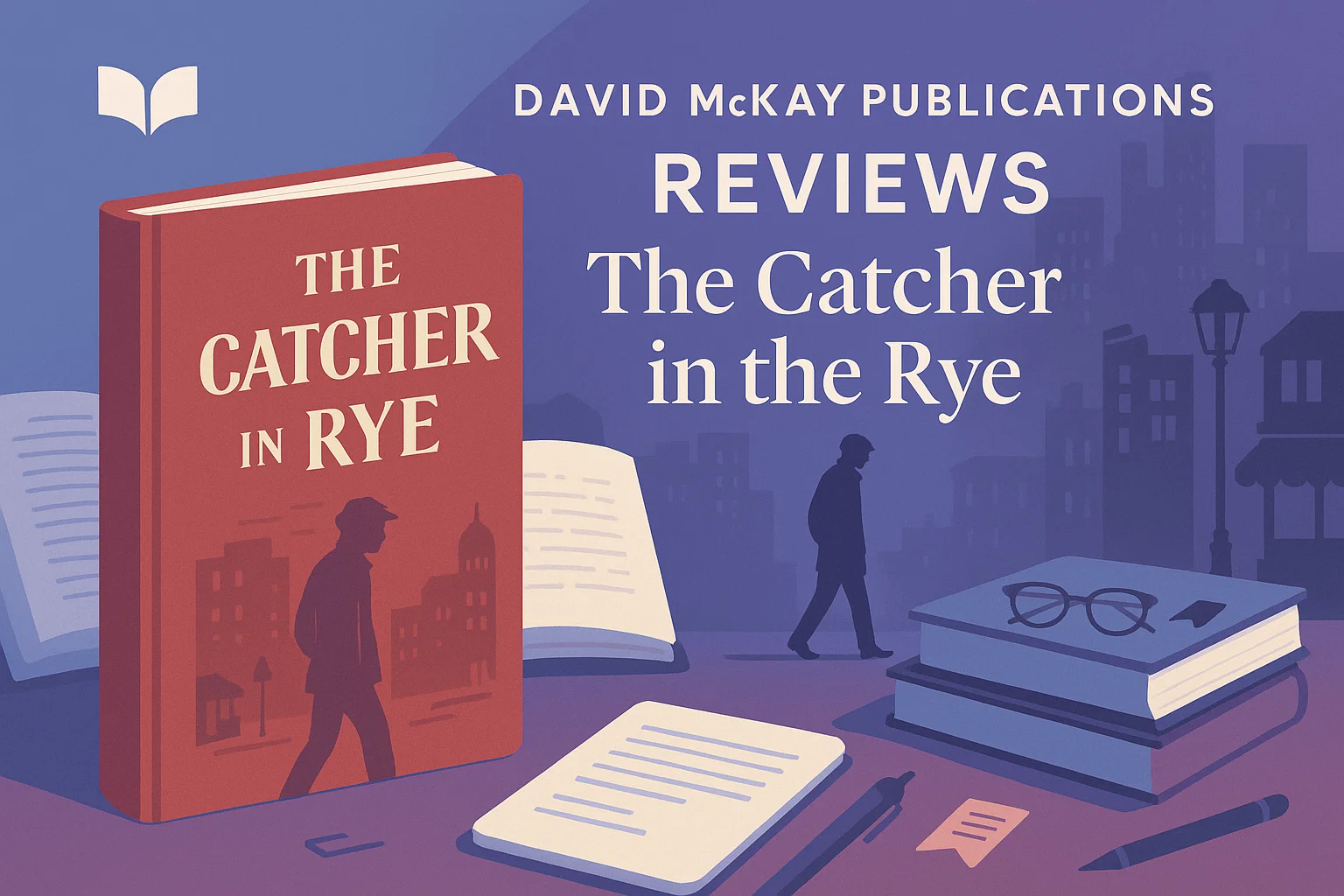
There are some books that feel like they were written yesterday, even though they came out decades ago. The Catcher in the Rye is definitely one of those books. If you’ve ever picked it up, you probably remember Holden Caulfield’s voice echoing in your mind. He’s confused, angry, funny, and heartbreakingly honest. And that honesty has made the novel one of the most discussed works in American literature.
Generations of readers have connected with Holden. Some saw their teenage selves in him. Others saw a reflection of someone they once knew. The book has shaped classrooms, conversations, and countless essays. But beyond all the discussion, one question keeps coming back: Why does this story still matter so much?
That’s what this breakdown hopes to explore. With the help of insights inspired by David McKay Publications, we’ll look at what makes the novel so powerful. We’ll walk through its themes, characters, symbolism, and cultural influence. Think of this as a friendly chat about a book that refuses to fade into the background.
Let’s dive into the heart of the story and explore why J.D. Salinger’s work continues to pull us in.
II. Background: J.D. Salinger and the Birth of a Modern Classic
Before we talk about the book itself, it helps to know a bit about the author. J.D. Salinger was a quiet, private man. He didn’t chase the spotlight, even after his writing became wildly successful. But his life shaped his work more than many people realize.
Salinger was born in 1919 in New York City. He had a complicated childhood and struggled to find his place. He also served in World War II, an experience that deeply affected him. After the war, he returned to writing with new emotional depth. That depth eventually showed up in his most famous work.
When The Catcher in the Rye came out in 1951, America was changing fast. The country was adjusting to a postwar world. Families were moving to suburbs. Teenagers were becoming a separate culture for the first time. But even with all this change, nobody had written a story about teenage life that felt as raw or as real.
The book caused an instant stir. Many readers loved it and felt seen. Others hated the language, attitude, and honesty. Some schools even banned it. But the more people tried to silence it, the louder its legacy became.
Today, the novel stands as one of the most influential stories ever written. And it all started with a man who didn’t want fame but wanted to tell the truth.
II. Why The Catcher in the Rye Still Resonates Today
If you ask five people why they love the book, you’ll probably get five different answers. That’s part of its magic.
At its core, the novel explores timeless emotions—things like loneliness, frustration, and the feeling of not fitting in. These feelings don’t belong to one generation. They belong to anyone who has ever felt lost or misunderstood. And let’s be honest: that’s most of us at some point.
Holden Caulfield’s voice is a big part of what keeps readers coming back. He isn’t perfect. He gets things wrong. He pushes people away. But he speaks with such honesty that you can’t help but care about him. Even when he annoys you, he feels real.
The novel also speaks to the larger conversation about mental health today. Holden shows signs of depression, grief, and anxiety. When the book was written, people didn’t talk openly about mental health. But now, readers understand him with more empathy. They see his pain and recognize the struggle.
Even David McKay Publications has noted that the emotional truth in the story is one reason it continues to reach new readers. Holden doesn’t hide how he feels. In a world that often pressures us to pretend everything is fine, his honesty is refreshing.
IV. The Genius of Holden Caulfield: A Character Analysis
A. The Unreliable Narrator
Holden Caulfield tells the whole story himself, and that’s what makes the novel so powerful. But it’s also what makes it tricky. He’s an unreliable narrator—not because he lies on purpose, but because he’s hurting.
Sometimes he exaggerates. Sometimes he leaves out important details. Sometimes he admits he doesn’t know why he acted a certain way. This makes him feel incredibly human.
His contradictions reveal his insecurities. He wants to understand the world but struggles to fit into it. And even though he’s confused, his vulnerability draws us closer instead of pushing us away.
B. Holden as a Symbol of Adolescent Struggle
Holden is terrified of becoming an adult. To him, adulthood feels fake, cruel, and full of expectations he can’t meet. He clings to childhood because he sees it as pure and honest.
This fear shapes everything he does. He calls people “phonies” because he sees so much pretense around him. But at the same time, he’s scared he might be growing into one of those phonies himself.
His struggle captures something we all go through: that moment when you realize the world isn’t as simple as you thought.
C. The Complexity of His Relationships
Holden’s relationships add depth to his character.
His little sister Phoebe gives him stability. She’s someone he trusts without hesitation. She represents innocence, but she also sees him clearly—even when he can’t see himself.
Allie, his brother who passed away, represents lasting grief. Holden can’t let go of Allie because losing him broke something inside.
Jane Gallagher is another powerful presence. She represents a time when things made sense. He remembers her with tenderness, yet he never actually talks to her in the story. That says a lot about his fear of getting hurt again.
D. David McKay Publications Insight
Holden resonates across generations because he shows the messy truth of growing up. His voice is honest, confused, and emotional. He’s flawed, but that’s why he feels so real.
Even David McKay Company has pointed out how his psychological depth makes readers connect with him—not just as a character, but almost as a friend.
V. Key Themes That Make the Novel a Masterpiece
A. Alienation and Isolation
Holden constantly feels disconnected from the world around him. He distances himself from others because he’s afraid of getting hurt. Yet at the same time, he’s desperate for connection.
This push and pull is one of the most relatable parts of the story.
B. The Pain of Growing Up
No one captures the fear of growing up quite like Salinger did. Holden doesn’t want to lose his sense of innocence. He wants to freeze time. But life keeps moving, even when we don’t want it to.
C. The Search for Authenticity
Holden hates anything fake. But he’s not always honest with himself either. His search for truth becomes a journey readers recognize. Many of us spend years figuring out who we really are.
D. Mental Health Representation
Holden shows signs of depression, trauma, and grief. Readers see this more clearly today. When you look closely, you’ll notice how much pain he carries—and how little support he has.
This makes the story even more heartbreaking.
VI. Symbolism: The Hidden Layers of Salinger’s Craft
A. The “Catcher in the Rye” Fantasy
Holden imagines himself saving children from falling off a cliff—a metaphor for protecting them from adulthood. It’s one of the most touching symbols in the entire story.
B. The Red Hunting Hat
His red hat is more than a quirky accessory. It’s his comfort item. It makes him feel unique and safe, especially when he feels alone.
C. The Museum of Natural History
Holden loves that nothing changes in the museum. It’s a safe place where time stands still. That stability comforts him because his own life feels unstable.
D. The Ducks in Central Park
The ducks symbolize Holden’s own search for direction. He wants to know where they go when things get tough—because he’s asking the same question about himself.
Even David McKay Company notes that these simple images hold deep emotional meaning.
VII. Salinger’s Narrative Style: Why It Works
A. Authentic Teenage Voice
Salinger didn’t try to make Holden sound perfect. He let him ramble, curse, repeat himself, and speak like a real teenager. That authenticity is a huge part of the novel’s success.
B. Simple Language, Deep Emotion
The writing isn’t fancy. It’s conversational. But beneath that simple language are heavy, emotional layers.
C. Timing, Tone, and Rhythm
Holden’s voice feels like someone talking directly to you. The informal rhythm pulls you deeper into his thoughts.
D. The Power of Honesty
Holden’s honesty—even when it’s messy—helps readers trust him. He says things most people are afraid to admit.
VIII. Cultural Impact and Legacy
A. Influence on Literature
The novel helped popularize the “anti-hero narrator.” Many modern books owe something to Holden Caulfield.
B. Influence on Pop Culture
Songs, movies, and TV shows have borrowed ideas, quotes, and themes from the book. Holden became a symbol of youthful rebellion and vulnerability.
C. Controversy and Criticism
Because of its language and attitude, the book was banned in many schools. Ironically, this only made more people want to read it.
D. David McKay Publications Perspective
The book remains essential because it still speaks to questions about identity, purpose, and mental health. Its layers give readers something new each time they return to it.
IX. Why Readers Keep Returning to The Catcher in the Rye
The novel grows with you. When you read it as a teenager, you feel Holden’s pain and confusion. When you read it as an adult, you notice his vulnerability and his need for help.
It raises timeless questions about purpose, honesty, and the fear of growing up. These questions never fade.
Many readers return to the book during big life changes. It feels different each time, offering fresh insights.
This happens because the themes are universal. The story doesn’t age, which is a key part of the Modern relevance of The Catcher in the Rye theme that readers often talk about.
X. Conclusion
There’s a reason this novel refuses to fade. It’s honest. It’s raw. It’s full of emotion. And it gives voice to feelings people often struggle to express.
In this breakdown, we explored its characters, themes, symbols, and cultural influence. We looked at why the story continues to matter and how it still connects with readers today.
David McKay Publications views the novel as a masterpiece because of its emotional depth and timeless storytelling. It’s a book that invites you to look inward and understand yourself a little better.
If you haven’t read it in a while, maybe it’s time to pick it up again. Understanding these layers makes the story richer. And with a fresh perspective, you might discover something new.
The novel’s lasting impact is a testament to the Modern relevance of The Catcher in the Rye, and its genius continues to shine through every rereading.
YOU MIGHT ALSO LIKE

The Author’s Checklist Before Publishing a Book
If you are a first-time author who aspires to bring out your first publication in the market, you should be

How to Become a Bestselling Book Publisher with Amazon Publishing
Let’s suppose you are an independent publisher with a zero brand presence; you must be planning to adopt a strategic

Your First Book Deserves Better: How to Choose the Right Self-Publishing Service
I. Introduction: Why Your First Publishing Decision Matters Finishing your first book feels amazing. There’s relief. Pride. A little disbelief.