
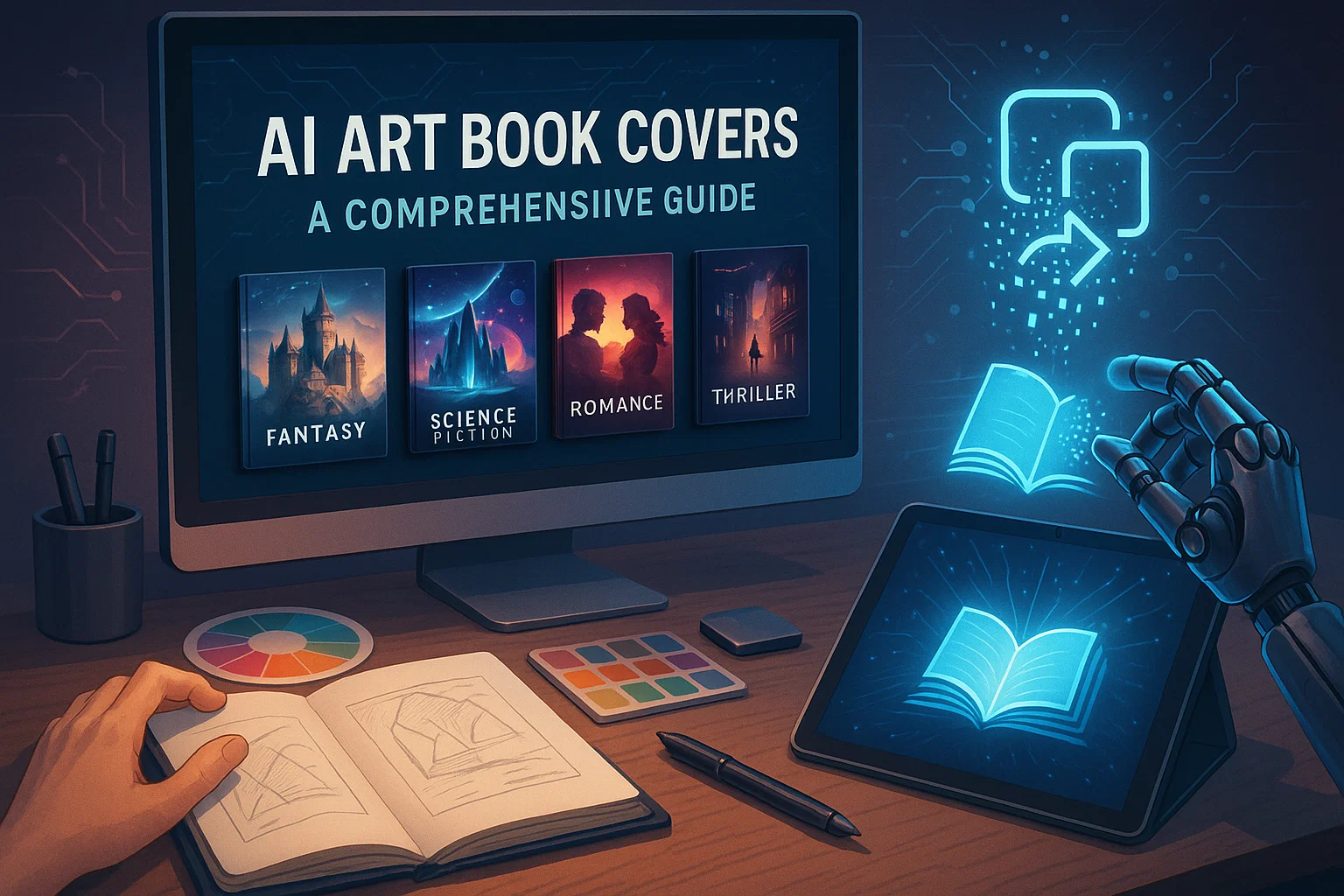
Let’s suppose you are an emerging book cover designer who intends to create and design stunning, aesthetically pleasing book covers that resonate with the target market trends and perceptions. In such a case, you are required to boost your design skills and efficiency through leveraging AI technology. AI design tools hone your visual voice, allowing you to generate unique, high-quality cover design images and concepts that align with the story.
Reading this well-informed blog lets readers know how the book cover design process has been transformed over the past few years. The pre-2020 era involved manual book cover design. The cover designers used software like Photoshop to design emotionally resonant manuscript covers with fascinating designs and concepts. To bring innovation and strategic design in book overs allowed design experts to blend traditional artistic features with modern technological advancements. Using powerful, user-friendly AI models, Midjourney, DALL·E 3, Leonardo AI, and Adobe Firefly create AI-generated stylized cover designs with vibrant backgrounds, custom imagery. unique and compelling designs. Moreover, designers add 3D design capabilities to generate stunning, professional-quality manuscript covers.
AI in book publishing has revolutionized the book cover design process. Fantasy illustrations, specific color palettes, engaging layouts, topography, and professional fonts create exceptional book covers that captivate readers. According to recent statistics provided by Canva, over 60% of designers have embraced AI digital design tools to craft digital cover designs. With high speed, versatility, and cost-effectiveness, specialized AI art generators empower self-publishers to design compelling book cover designs with limited resources. They instantly create initial design concepts and unique visual mockups based on a simple text prompt.
Professional designers also prefer AI-powered solutions as traditional book cover creation causes various challenges in refining the cover design and layout. Multiple revision phases include balancing visual elements, simplifying a cluttered layout, improving typography, adjusting fonts, and color patterns. Lack of graphics, animations, and image distortion fails to create impactful book covers. Conversely, AI design tools eliminate the time-consuming process of revision; designers no longer wait for days or weeks to deliver different cover design samples. Within a few minutes, they refine their vision by simply fine-tuning the text prompt and regenerate a high-resolution image, integrating different styles, colors, and impressive topography.
For new designers who are experiencing mental block and are unable to conceive creative ideas and thoughts, AI algorithms serve as a powerful brainstorming partner. It allows designers to generate unique design prompts. Based on these creative stimuli, the tools effectively accelerate the ideation phase, further facilitating designers to craft professional-looking, stunning, market-ready visuals that stand out in a crowded market.
Why Book Covers Still Matter in 2025
It is a literal truth that readers judge a book by its cover. It demonstrates the targeted audience’s perception, choices, buying, and reading trends. Around 80% of people get attracted to eye-catching book cover designs and opt to buy books solely due to their stunning book covers. A well-crafted cover with specific visual cues and color psychology sets the emotional tone of the book. For instance, dark colors used for mystery book covers arouse suspense and thrill in readers. Bright and light-hearted colors used in children’s books boost positive emotions, energy, and ecstasy in young book lovers. Similarly, pastels/soft colors cover designs of contemporary romance or literary fiction, instill warmth, and softness.
An impressive typography, comprising modernity, minimalist layout, fanciful fonts, and imagery, immerses readers in the story world. Powerful and intriguing settings, high-resolution illustrations, and a well-structured visual hierarchy entice readers to click the ‘Look Inside’ feature and browse the sample pages to learn about the book’s features, including the plot, theme, settings, and characters. Attention-grabbing covers evoke emotional connection and also influence readers’ buying trends to purchase a highly stylized cover art book.
Aesthetically pleasing book covers with minimalist, fantasy-realism, illustrated realism, and data-driven designs function as small thumbnails for marketing in the digital era. As more audience browse online stores to look for compelling book titles and covers, prominent book cover design services are employing AI design tools to create covers with a specific aesthetic, modern design technique, and multiple visual elements. Self-publishers and authors have the creative autonomy to create elegant, smarter, and cheaper book covers that stand out in a visually cluttered online market. The designers are using various AI design tools to generate designs for the book cover and interior layout. AI art generators modify the design process, allowing designers to integrate multiple design options. It includes minimalist design and colors, a fantasy-realism theme, clear and uncluttered typography, bold titles, and powerful artistic motifs. These striking AI cover designs have now become a significant part of marketing campaigns and are viewed as tiny thumbnails on online stores. Stunning book covers attract a broad audience, increase click-through rates (CTR), and high turnover in book sales. These sophisticated covers embedded with blogs, articles, and posts on the book writing services websites and social media sites enhance brand recognition and convert browsers into potential buyers.
Benefits of Using AI for Book Covers
Speed
Let’s suppose a designer intends to create a book cover for a fantasy novel; they may experiment with multiple AI algorithms that help them in brainstorming and developing numerous concepts and ideas in less time. The author processes a visual prompt, such as envisioning an enchanted forest covered in 3 styles, in cinematic style and realistic images. AI art generators speed up the creative process by generating an outstanding book cover based on input data within a few minutes.
Affordability
As compared to traditional book cover design, AI-generated art comes up as a cost-effective solution for indie authors and publishers. They can leverage a variety of AI design tools that create professional layout designs and images quickly. Thus, the tools empower self-publishers to create high-fidelity genre covers with reduced design costs.
Creative Variety
AI design tools have boosted the creative potential of designers, allowing them to create design prompts using their fresh perspectives. The tools eliminate creative blocks and help new designers explore various AI generators to create endless concepts, styles, and design versions. Personalized art generates multiple ideas in seconds that help designers develop exclusive design covers.
Customization
Another benefit for AI designers is to create comprehensive prompts featuring genre-specific imagery, a minimalist cover design, or hyper-realistic illustrations. Using their diverse art styles, the artists add design variations, mood, tone, and theme in their prompts that generate the best-selling covers.
Accessibility
Authors facing creative blocks or lacking design backgrounds can leverage AI generators to create professional-looking art covers. AI tools with intuitive interfaces offer a variety of design templates that help beginners to generate countless unique design prototypes and cover concepts. Moreover, drag-and-drop functionality in AI tools facilitates non-designers with seamless experimentation of multiple design themes. The designers add design effects and improve topography, and create customized and professional covers within minutes.
What Is AI Art and How Does It Work?
How AI Interprets Prompts to Produce Art
AI artwork is generated through AI programs involving machine learning and text-to-image models. Today, many book publishing services favor digital book covers created by AI art generators. They facilitate new authors and publishers to enter detailed text prompts to design book cover designs and fascinating images. The design prompts are processed through AI diffusion models and generative networks, creating an engaging text description, the best image quality, and videos. A simplified process includes training AI art generators on enormous datasets of images and text. AI models comprising machine learning and natural language processing analyze a vast data repository of images, text descriptions, and videos using websites and other digital resources. Neural network in AI algorithms visualizes the patterns, styles of the user prompt and quickly designs a stunning cover design or image that resonates with the designer’s preferences.
To create fascinating book cover designs, the book layout designer employs modern AI art generator models, comprising DALL·E and Firefly and Diffusion models, such as Midjourney, Stable Diffusion..These AI generative models use a text prompt to refine the image by removing the random noise and adjusting the settings and style of the narration. Moreover, the tool adds creative graphics, color patterns, topography, and symbolism to create visual images and textual descriptions that represent the book genre and theme.. An innovative design technology empowers self-publishers to create exceptional AI art book covers that appeal to the specific market and bring high sales and conversions.
Best AI Tools for Creating Book Covers in 2025
Professional publishers such as David McKay Publications use AI design tools to create book covers, images, and layouts. The lead book designer uses various AI art generators, including Canva Pro + AI, Adobe Firefly, Midjourney, DALL·E 3, and Leonardo AI
Midjourney
An AI art generator is widely used by design specialists for artistic depth and cinematic detail. Designers send their creative prompts to design spectacular cover designs and images. Based on the user’s response, Midjourney explores various concepts in the database and instantly designs high-quality artistic visuals that match the style and tone of the narrative. The lead designers at book Cover design services create aesthetically pleasing cover designs and hyper-realistic images for fantasy, sci-fi, and mystical genre books from the generated detailed text prompts. High-resolution and advanced prompt control and stylization enrich the quality of AI-generated images by adding high-contrast colors and simple, bold typography, and impressive background colors. Breathtaking cover designs entice readers to make instant pre-orders of the new release.
DALL·E 3 (by OpenAI)
Another versatile design tool, DALL·E 3, developed by OpenAI, analyzes numerous cover concepts found in the database. The powerful feature of realistic image generation produces genuine creative images from text descriptions. With DALL·E 3, new designers comprehend and interpret complex prompts to generate intriguing visuals and illustrated designs that increase readership. The integration of Canva and ChatGPT enables self-publishers to generate and enhance visual images by adding visual effects. adjusting color palettes, font styles, and formulating uncluttered design layouts that boost the online visibility of the book.
Adobe Firefly
Displaying the world of AI-powered creativity, Adobe Firefly assists professional AI book designers in modernizing the design workflow. With a seamless integration with Photoshop and Illustrator, an expert designer develops striking cover images and designs or improves the visual hierarchy of the existing images such as such as colorizing images and removing backgrounds. The advanced customization feature further helps in fine-tuning the book covers by adding design variations for optimal results.
Leonardo AI
A robust generative AI design tool benefits indie authors and design specialists with the conceptualization of book cover ideas. The tools help in brainstorming, allowing designers to craft design-driven concepts for book covers of fantasy or romance art and other genres. Moreover, the experts modify the cover design by adjusting image properties, removing unwanted features, and adding artistic designs and textual effects. Professionally designed covers are likely to catch a reader’s eye in physical bookstores and online stores, which enhances book marketability and sales.
Canva Pro + AI
Book publishing companies also employ other AI design software to facilitate apprentice designers in generating professional design layouts. Canva Pro + AI provides a variety of design templates to let designers create AI images and design prototypes. A versatile and intuitive platform, Canva includes a drag-and-drop editor feature that empowers novice designers to navigate its extensive library of templates, stock images, illustrations, and design elements, and create eye-catching e-book covers. The integration of AI text tools with design templates streamlines the design process, enabling beginners to create digital illustrations and designs for e-book covers.
How to Create an AI Art Book Cover: Step-by-Step
Step 1: Define Your Genre and Target Audience
Before planning to design an immersive book cover, professional book publishers conduct a market survey to know their targeted audience. A comprehensive research of the demography lets them know for whom they intend to write, the perception, and the reading choices of the potential audience. Moreover, the publishers learn about their preferred book’s genre and the content they like to read. Furthermore, it helps them identify the kind of images and design elements the audience desires to include on the cover. The targeted market research further expounds the tone and mood that the audience expects to see in book covers and that tempts them to read the book. For example, if the author intends to create a children’s book cover, the tone and style should be brighter, thrilling, and adventurous to capture a young audience’s attention. A mystery novel cover design has a dark and dramatic layout with illustrated realism. Romantic book covers highlight emotion and warmth; they combine fantasy themes with real-world visuals, contrast, and tension.
Step 2: Write a Powerful AI Prompt
As designers begin brainstorming the cover design ideas, they should keep in mind the concept and theme of the book. Research various design trends, the mood, style, color, perspective, and lighting that make the cover appealing to a wider audience. The design experts customize the design of the visual by adding whimsical fonts, striking colours, images, and catchy titles that hook readers. To bring creativity to your design prompt, you have the option of using AI generators. Having varying features, including providing numerous design templates, image generation, and text-based designs, the specialized tools help in generating outstanding covers that cater to the current market trends.
Step 3: Generate and Refine
Let’s suppose an AI designer is working on a mystery fiction book cover. Your prompt includes a mysterious woman in a red cloak standing before a stormy castle. The cover design displays cinematic lighting, dramatic atmosphere, and fantasy realism. To make the book cover unique and immersive for the readers, experts are required to select a suitable AI generator and download the file in different formats, such as JPEG, PNG, or PDF. Once the file is formatted, the novice designers are required to upload high-resolution images, adjust typography, modify colour patterns, fonts, and add visual effects. After creating multiple design variations, the illustrators select an impressive design layout and refine the visual hierarchy. Adding logos, or graphic symbols, and integrating AI art with stock photos gives a more balanced and realistic look to the cover design.
Step 4: Edit and Polish
AI in book publishing allows expert book designers to choose AI design tools that have a user-friendly interface and help in simplifying the design process. AI image generators, such as Photoshop, Canva, Midjourney, Stockimg.ai, and BookBrush, have advanced machine learning algorithms that offer the best design options for book covers. The tools give complete autonomy to AI designers to adjust typography, the design, and images, and add custom text. Additionally, they enhance the color palette, change fonts, and add frames or lines. The tools, such as Fotor, bring variation in cover design, enabling designers to create image-to-image and text-to-image AI book covers. Adobe Firefly and Recraft offer a high-resolution design experience, allowing digital artists to create AI illustrations and book cover mockups from text prompts.
Step 5: Add Title, Author Name, and Series Branding
A layout artist emphasizes that the book covers are aligned with the genre and book theme. They organize the visual hierarchy, such as the arrangement, structure of the book title, cover page illustrations, headings, and the author’s name. For instance, the narrative elements of an adventure novel cover include bold typography and dark colours like black, red, or orange. The cover design of an introspective book represents blues and green color patterns. For fantasy novels, the designers use soft, color patterns along with light typography to create conspicuous cover designs.
Step 6: Export in Print and eBook Formats
Once the covers are refined, the publishers upload the files and export them into different publishing formats, such as JPG, PNG, or PDF with 300 DPI. The standard dimensions for print are 6×9, and for the digital format, the designers keep 1600×2560 e-book size. Thus, professional publishers produce exclusive digital cover designs that meet industry standards for both print and e-book formats.
Legal and Copyright Considerations
Book publishing companies remain abiding by copyright and licensing laws, specifically when using AI-generated images for generating book cover designs. The U.S. Copyright Office maintains that AI works are not eligible for copyright protection. However, the authors receive partial copyright protection for AI-generated work. Professional book publishers should thoroughly check the Terms of Service (TOS) of the specific AI tool they are using for cover design creation. The TOS explicates which tools offer ownership and licensing, while some tools retain ownership of the generated images.
For commercial usage, each AI art generator, such as Midjourney, DALL-E, Canva, and Adobe Firefly, has set its rules. They also provide exclusive rights to businesses to perform publishing and design workflow. The design tools with paid versions authorize designers to use AI generators to create high-resolution, hyper-realistic images and unique cover designs related to the book genre and theme. The platforms, such as MidJourney or Shutterstock AI, offer a paid subscription for commercial usage. Midjourney provides a monthly membership to companies to keep their AI-generated images and designs private. Canva also has specific restrictions to prevent non-members from getting access to confidential. Input restrictions further compel publishers and designers to keep records of their prompts and post-processing edits, ensuring that the design and text prompts and uploaded images do not infringe on third-party intellectual property rights. While AI generators offering free design services make all AI-generated content public and accessible to all users.
The platforms, like Adobe Firefly, train their AI models on public domain content. The copyright approach is designed to be commercially safe and legally sound, as it does not rely on content taken from the web without permission or from users’ personal content. Moreover, they pay compensation for the contributor’s work used in the training dataset.
The Role of David McKay Publications in AI-Enhanced Design
Providing AI-generated Concept Options
A renowned publishing house, David McKay Publications, is recognized for integrating traditional publishing values with contemporary innovation. They have applied AI technologies for book editing and production, and are now providing AI-driven design services to clients worldwide. New designers often encounter creative roadblocks that hinder their ability to generate fresh ideas or express their creativity. The design specialists identify the most effective tools that enhance the creativity of beginner designers. They facilitate them in using AI generators like ImagineArt, NightCafe, CoverDesignAI, Midjourney, and DALL-E to improve their ideation and brainstorming efforts. With the assistance of AI generators, authors and designers input text prompts that quickly produce a variety of AI concepts and design prototypes. The intuitive interfaces of AI software enable authors, publishers, and designers to efficiently create attractive front and back book cover designs, images, and layouts.
A well-known publishing company, David McKay Publications, is known for blending classic publishing integrity with modern innovation. They have leveraged AI tools for book production and editing, and now they are offering AI-assisted design services to clients across the globe. New designers face creative blocks and are unable to generate new ideas or express creativity. The design experts find the best tools that maximize the creativity of novice designers. They guide them to use AI tools such as ImagineArt, NightCafe, CoverDesignAI, Midjourney, and DALL-E that help boost their ideation and brainstorming process. With the AI generator’s assistance, the authors and designers process text prompts that instantly generate numerous AI concepts and design mockups. The user-friendly interfaces of AI software help authors, publishers, and designers to create stunning front and back book cover designs, images, and layouts quickly.
Read more on our Medium blog: A Beginner’s Guide to AI-Generated Book Covers
Ensure High Quality Editing and Formatting Before Publishing
Professional e-book designers at David McKay further assist authors with book cover formatting. It involves setting the correct size of bleed and margins, determining the final trim size, creating a clear hierarchy, bold typography, and adding visual elements like background imagery and color palette. With AI tools such as Canva, Midjourney, and Adobe Firefly, AI book formatters effectively handle the manuscript formatting, including typography, margins, spacing, and generate tables of contents. Moreover, they prepare a manuscript for publication by exporting the files into various formats such as EPUB, PDF, and MOBI.
AI + Human Collaboration at David McKay Publication
Professional designers at David McKay syndicate human creativity with AI’s tools for prompt data analysis and speed up the design process. The designers use a variety of AI tools to attain more innovative design outcomes. AI assists in generating initial design concepts and prototypes. AI-generated suggestions allow designers to modify the design layout and refine topography, color palettes, and balance visual hierarchy. AI tools with a wide range of datasets and a library of templates and stock photos generate high-resolution visuals to create iterative book covers that capture the reader’s spirit.
Ensuring Ethical and Copyright-safe AI Usage
The publishing experts at David McKay Publications guide new authors and designers related to ethical and copyright-safe AI usage. Amateur designers are recommended to use an AI algorithm as a support tool for performing publishing and designing tasks. They are required to register their original works under U.S. law and mention in the acknowledgement section if they have used AI tools. Specify the tool and its purpose. The designers must adhere to ethical principles, ensuring that the AI tools are used as a support tool for conceptualization and research, or employed for formatting and refining the cover layout and design. If they have used AI-generated designs or an AI-generated image, they are required to disclose the AI-generated material used. For legal ownership of a design work, the publishing supervisors ensure that the designers do not incorporate raw AI output directly. Instead, they use AI-generated elements for the initial design process and add human ideas and concepts to create a unique, trademarked work.
Offering Cover Design Consultation for Both Traditional and Self-published Authors
The publishing experts offer a free 30-minute consultation with publishers, illustrators, and designers. During these sessions, the professional design team assesses the preferred genres and design trends that the target audience looks for in book covers. Additionally, they gain insights into a designer’s creative vision and the scope for developing manuscript cover designs. At David McKay Publications, the publishing specialists empower self-publishers to embrace a hybrid publishing approach. This method encourages authors and book designers to combine human creativity with the use of AI tools. Designers use their creative freedom and artistic instincts by crafting striking cover layouts with color schemes, typography, and other visual components. In finalizing the cover design before publishing, designers utilize AI design tools to enhance layout composition and produce visually pleasing book covers that engage a diverse readership.
Recapitulate
Whether you are a beginner fiction writer looking to develop a preliminary idea for the cover design of your fantasy book or an indie sci-fi author creating captivating images, eye-catching color schemes, font styles, bold lettering, and sleek layouts. Professional designers tap into their creativity and artistic intuition to produce distinctive and beautiful book covers. To enhance their skills and design knowledge, professional designers utilize industry-standard AI design software. AI tools commonly used to generate book covers include Canva, Midjourney, Stockimg.ai, and BookBrush. AI-generated artwork allows self-publishers to use their creative freedom in creating tangible visuals and imaginative designs with limited resources. The diverse features of AI tools, including design templates, a drag-and-drop functionality, and specialized cover creation, have simplified the design process. Consequently, this notion supports the idea that AI algorithms are used by writers and publishers to optimize publishing and design work. AI can’t replace human creativity; designers have successfully integrated AI art with personal touches to craft fascinating book covers.
So, if you are a novice designer facing challenges in the early stages of generating initial image ideas or experimenting with color schemes, you are encouraged to utilize AI design tools such as 3D and motion covers, OpenAI’s GPT, Canva + DALL·E, and Adobe Firefly. These AI generators guide you from the initial concept phase through layout design and the management of the entire design process. Furthermore, you can explore datasets and create magic designs instantly through built-in design templates. AI – generated mockups and a range of design concepts resonate with the essence and theme of the story. While finalizing the layout and typography, the designers apply an AI algorithm to incorporate design variations to develop exclusive AI-generated book covers. Hence, AI streamlines the design approach, allowing designers to enhance their creative designs and aesthetics.